
This article contains affiliate links. We earn a small commission on purchases at no extra cost to you.
This is the complete guide for first-time horse owners — what to ask before you buy or lease, what a horse really costs, and how to build the setup and support team your first horse needs. Because the first horse is never just a horse. It's a decision about how you spend your time, your money, and a real share of your emotional life. It will ask more of you than almost any other animal — and give back in ways greater than you could ever believe.
This guide doesn't start with a product list. It starts further back — with the questions worth asking before you sign anything, buy anything, or bring an animal that weighs half a ton and lives for 25 to 30 years home.
If you're already in — horse bought, board sorted, trailer rented — this is still the right place to start. Or if you've been around horses before and are coming back after some time away, this is still the place for you. Owning a horse well is a practice you build over years, and the foundation is everything.
“The relationship you build in the first year shapes everything that follows.”
The honest conversation every first-time horse owner guide should start with
Horse ownership has a version that looks a certain way. The golden-hour trail rides. The barn that smells like cedar and hay. The horse who lowers her head against your chest and exhales.
That version is real. So is the farrier appointment you've rescheduled twice because work got in the way, and now your horse is moving short. The trainer who tells you something about your seat you've been avoiding hearing. Or the 3 a.m. call from the barn that your horse is colicking.
The first honest question isn't "which horse should I get." It's "am I ready for what this actually is."
Horses are time-intensive in a way that's hard to convey before you're in it — the daily care, the relationship-building, the vet coordination, the learning curve that doesn't flatten for years. They're financially significant in a way that catches new owners off guard. They're emotionally demanding, too, because you're building a partnership with an animal whose first instinct is flight, and your job is to become someone it deeply trusts.
None of this is meant to discourage — the rewards run deep. But the people who thrive as owners go in clear-eyed; the ones who struggle usually led with the fantasy and never planned for the reality.
So be honest with yourself about your current life: your schedule, your financial flexibility, your support system, whether you have a trainer in place or are still figuring that out. All of it shapes which decisions you make, and in what order.
Your skill level and your horse's training level have to match
This is the most important practical decision in the whole guide. Get it wrong and nothing else works.
A first-time owner needs a made horse — not a project, not a young horse with "great potential." A horse who has been there, done that, and will stay patient while you figure out what you're doing.
Here's the frame that matters: your horse's training should always meet or exceed your level as a rider. A beginner needs a horse so schooled he could practically teach the lesson himself. An intermediate rider coming back after time off might handle a horse trained just above where they ride now. But a novice on a green horse is a combination that ends badly for both of them.
The harder part is ego. A young, flashy, green horse is exciting — and it puts you in the position of learning to ride while you're learning to train, making mistakes that cost the horse. A steady fifteen-year-old who knows her job and forgives you for the wrong diagonal isn't a consolation prize. She's the one who teaches you everything.
Then there's the trainer variable. If you plan to have a trainer ride the horse regularly, develop him, and teach you in weekly lessons, that changes the math — a horse your trainer can bring along is a different proposition than the same horse worked alone. Decide this before you start looking. It should shape both the horse you choose and what you're prepared to spend, on the horse and on the training.
The question to ask at every barn visit: "Is this horse right for where I am right now?" Not where you plan to be in two years. Right now.
Leasing vs. buying
Most people skip straight to buying. The case for leasing first is stronger than it gets credit for.
Outside of lessons, a lease lets you learn what you actually want before you commit. You think you want a forward warmblood mare with a floaty trot; six months in, you might find you prefer a quieter Quarter Horse who needs less leg. The horse you fall for on paper rarely looks the same once you've spent real time together.
A full lease usually means you cover the horse's board and care in exchange for exclusive use. A partial lease means you share the horse with its owner a set number of days a week and split the costs. Either way, put it in a very thorough written agreement. Always.
The financial case is real: you test the commitment without the capital outlay, and you learn what board, discipline, and temperament actually suit you before you spend somewhere around $8,000 to $80,000 or more.
The emotional risk is just as real, and too few people say it plainly. You can fall deeply in love with a leased horse. Then the lease ends, the owner sells, or the owner no longer wants to sell — heartbreak without the closure of having chosen it. It happens more than people expect. Go in knowing it's possible.
Even so, leasing is one of the best ways to find out whether ownership is right for you at all. If you're unsure you can sustain the commitment, or unsure what kind of horse you want, a lease isn't a lesser path. It's often the smarter one.
Rescue, green, or made: choosing the right horse for where you are
Three categories, three very different decisions.
The made horse is trained, experienced, and priced accordingly. He's been shown, hacked, trail-ridden, clipped, and loaded, so his response to the unexpected is calm — he's seen it before. For a first-time owner, this is almost always the right starting point: you pay more upfront, and what you get back is a horse you can actually ride and learn on from day one.
The green horse has limited training and a lower price to match, and he's a full-time job. Bringing one along takes skill, consistency, and patience most first-time owners haven't built yet. Pair a novice with a green horse and you get anxiety in the horse and frustration in the rider. It isn't about ego. It's a plain mismatch of where you both are.
The rescue horse deserves a longer look, because the appeal is genuine and the risks are specific. A rescue can be an extraordinary partnership. It can also carry physical issues (old injuries, dental neglect, poor nutrition) and behavioral ones (fear responses, learned helplessness, broken trust) that take months or years to work through. Many are absolutely worth it — the real question is whether you have the skill, support, and timeline to do right by one.
Before you buy any horse, ask directly:
What are his flaws? Every horse has them, and a seller who can't name one is a seller to walk away from. You want the honest list — buddy sour, spooks at plastic bags, gets fresh without regular work — so you can judge whether those specific things are within your ability to manage. A flaw you can work with isn't a disqualifier. A flaw you're waving off because you already love him needs a second look.
Bloodlines and breed temperament matter — not as destiny (training and handling shape far more than genetics), but as context, especially with a young or under-trained horse. Thoroughbred blood tends to run hotter and asks for a quieter, more balanced rider. A dressage-bred warmblood may move beautifully and need a particular kind of contact. A Morgan will try hard and forgive a lot. A draft cross might be the most sensible horse you ever sit on.
Off-the-track Thoroughbreds earn a special mention, because so many first-timers are drawn to them. They can be wonderful — with the right transition and a clear-eyed sense of what a former racehorse actually needs. Know what you're taking on before you fall for one.
Research the breed before you fall for the individual. The Arabian is a good example — one of the oldest and most influential breeds, recognized by the Arabian Horse Association, with real strengths and honest trade-offs worth understanding first.
Get a pre-purchase veterinary exam before any money changes hands. This is non-negotiable whether the horse is made, green, or a rescue. A pre-purchase exam — a PPE — is a vet's evaluation of soundness, health history, and suitability for your intended use; the American Association of Equine Practitioners outlines what a thorough one should cover. It typically runs around $250 to $600 depending on how thorough it is and whether imaging is included. It isn't pass/fail; it's information — a clear picture of what you're taking on. A seller who refuses one is a seller to walk away from.
Bring a more experienced set of eyes
No matter how experienced you are, take someone with you to see a horse for sale — a knowledgeable friend, or better yet, the trainer you already work with. A trained eye reads a horse hand-jogged down the aisle in a way an untrained one can't: early signs of soundness trouble, how the horse engages behind and gets underneath itself, the quality of its flexion. A few passes at the trot tell an experienced person a great deal.
They also know what a horse with real potential feels like under saddle, versus one with serious issues — a comparison that's hard to make on your own when you're the one buying. Better still, if it's your own trainer, they can sit on the horse and help you judge whether the two of you actually match, ability to ability, not just ambition to ambition.
A third party does one more quiet thing: they keep emotion out of a decision that should be calculated. A stunning horse might drag a toe at the trot — a possible neurological flag. A horse that's a thrill to ride might simply be too much horse to own safely. All of that, and more, goes into whether the horse in front of you is right for you now, and whether it can grow with you toward your goals.
How to read your horse
Everything you do as an owner — every training call, every vet conversation, every ride — rests on your ability to read what your horse is telling you. Horses communicate constantly; the trouble is that the language is subtle and easy to misread early on.
Ears pinned flat aren't always aggression. Tail-swishing in an otherwise calm horse is often pain. A horse who stops going forward under saddle isn't lazy — something may hurt. A few places to start:
Eyes. Soft eyes with a relaxed orbit mean a relaxed horse. Wide, white-rimmed eyes mean fear. A hard, glassy expression means he's bracing for something.
Ears. One ear on you, one ahead, means you have his attention. Both pinned is a warning. Flopped lazily to the sides means relaxed, maybe sleepy.
Posture. A cocked hind leg in the cross-ties is comfort. Standing rigid, unwilling to shift weight, can mean he's guarding something. Turning repeatedly to look at his flank signals belly discomfort.
Breathing. A snort under saddle is often released tension — a good sign. Long, slow exhales mean relaxation. Short, fast breathing during easy work means stress.
This is a starting vocabulary, not the whole language. Miss the quiet early signals and you end up reading your horse only once the problem is loud. We broke down forty of them — do you know what they all mean?
Beyond body language sits emotional matching — something the best trainers know and rarely say plainly. A hot, sensitive horse needs a quiet, confident rider; if you're anxious in that unfamiliar first year, a high-voltage horse amplifies the anxiety instead of settling it. A placid horse under an ambitious rider who wants more can frustrate both ends.
So ask honestly before you commit: is there an ease between you, even in the first moments? A horse who relaxes when you walk into his stall, stands quietly to be groomed, and moves off your leg without argument is already telling you something. You can train skill and build fitness, but a fundamental mismatch of energy is something you'll fight for years. Give the chemistry the same weight you give the conformation.
That chemistry isn't only found — it's built, mostly on the ground, long before you pick up the reins. Start there and everything under saddle comes easier.
What first-time horse owners actually need to buy
There's a version of this list that runs to forty items. This isn't that version. The honest one has two parts: what your horse needs, and what you need as a rider.
Tack is where first-time owners spend the most and research the least. Get the fit wrong and your horse pays for it — in pain, and in resistance that looks like attitude but isn't. Before the shopping starts, get the whole picture: what each piece does and how it's meant to sit.
For your horse
Saddle. Your largest investment, and the most important to get right. A saddle that doesn't fit causes pain, and pain shows up as resistance and tension long before anyone thinks to check the saddle. A quality used saddle in the right discipline runs around $800 to $2,500 or more. Synthetic is cheaper and easier to maintain; leather lasts longer, feels better, and holds its resale value. For a first-time owner with the means to invest, leather has the better pay off. For a deeper look at what makes leather tack worth the investment — and how to judge quality — see our
complete guide to leather horse tack.
Always have a saddle fitted professionally before you ride in it consistently. Then keep an eye on it over time, as your horse builds topline, ages, or begins to feel off under saddle. Our guide walks you through exactly what to look for.
Bridle and bit. For a first-time owner, a simple, mild snaffle in good-quality stainless steel or sweet iron is a sensible starting point. A well-made leather bridle with solid hardware will outlast several synthetic ones and mold to your horse's face over time. The bit itself should be chosen with your trainer's input — the wrong bit in the wrong hands causes discomfort, and a horse who's uncomfortable in the mouth is a horse who won't go forward willingly.
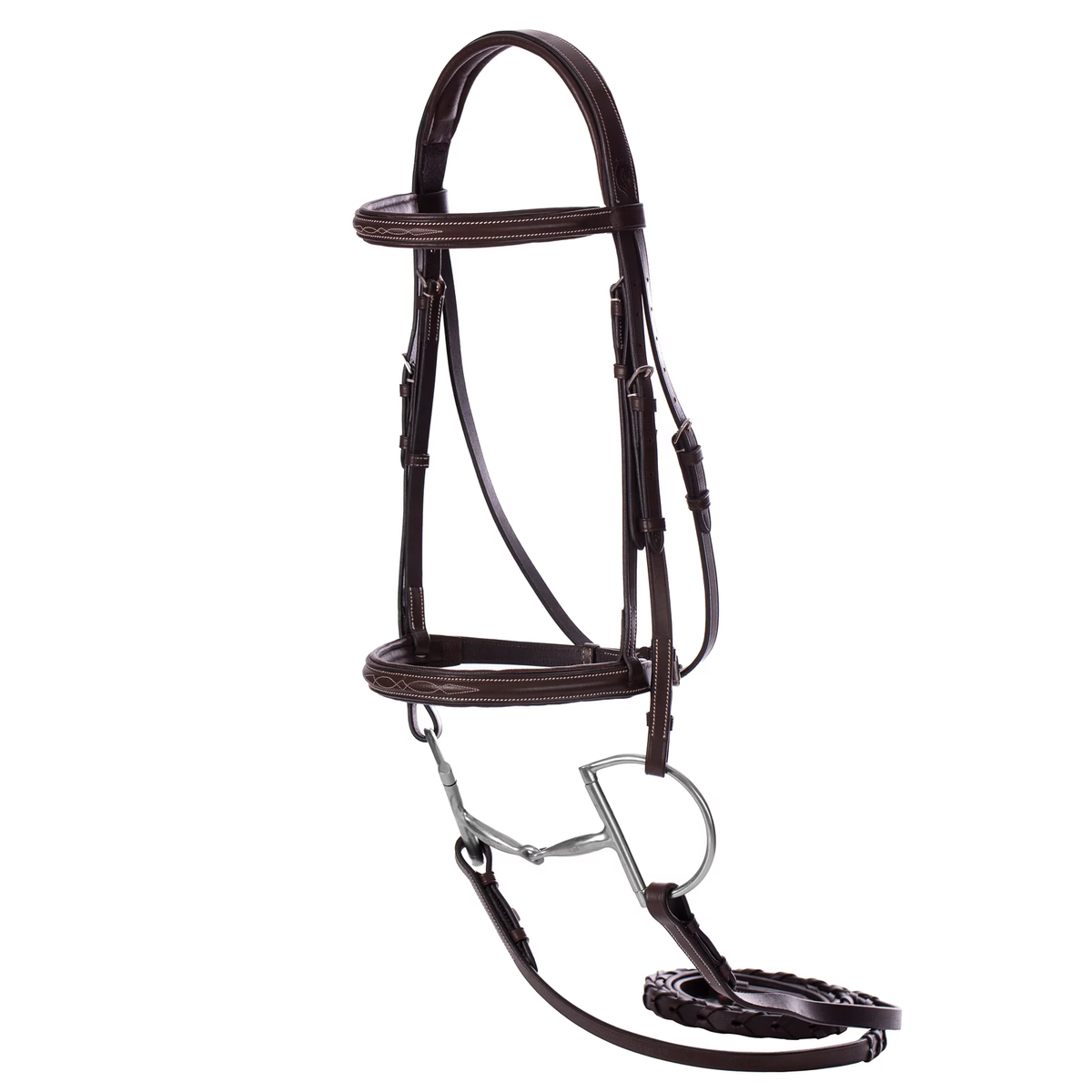
Quality Leather · First-Time Choice
Leather Bridles & Headstalls
Around $180–$350
Equinavia → Shop Now*Affiliate link — we earn a small commission at no extra cost to you.
Choosing the right bit is only half of it — fitting it correctly is the other half of the coin. Learn how to tell whether yours sits right before you read your horse's resistance as a training problem.
Grooming kit. The basics: a curry comb, a stiff brush, a soft brush, a mane-and-tail comb, a hoof pick. Keep them together, label them, and guard them — shared tools are how skin conditions spread. A good set lasts for years and makes the daily once-over something you look forward to, so it's worth choosing well.
Halter and lead rope. Buy quality. A halter that breaks at the wrong moment is dangerous, and a breakaway halter is the right call for crossties, trailering, or turnout — ideally, a halter comes off for turnout, but if your barn manager insists it stays on, make it a breakaway.
Saddle pad and girth. Keep them clean, well-fitted, and checked for wear; a twisted or dirty girth causes rubs and soreness, and neither is hard to prevent.
Girth fit, in particular, has more variables than most new owners expect — length, shape, and material all matter to your horse's comfort and movement. Check that yours fits right before it costs you — behavioral changes, movement issues, sores — all things a properly fitted girth avoids.
Every piece of leather you own — bridle, girth, reins, stirrup leathers — lasts five years or fifty depending on how you care for it. Clean and condition it on a rhythm and good tack becomes an heirloom; neglect it and you're buying it twice. Here's how to keep all of it in service for decades.
For you
A properly fitted helmet is non-negotiable — the one place in this guide where there's no version of cutting corners. It should be ASTM/SEI certified — the standard Riders4Helmets and the governing bodies treat as the floor — fitted by someone who knows what they're doing, and replaced after any impact, even one that leaves it looking fine. A helmet that's taken a fall has done its job and should be retired.
Fit is everything with a helmet, and it's easy to get wrong. Here's how to choose one that actually protects, not just one that looks the part.
Leather riding gloves protect your hands and give you a cleaner feel on the reins than bare skin — a supple pair with reinforced fingers lasts years with care.
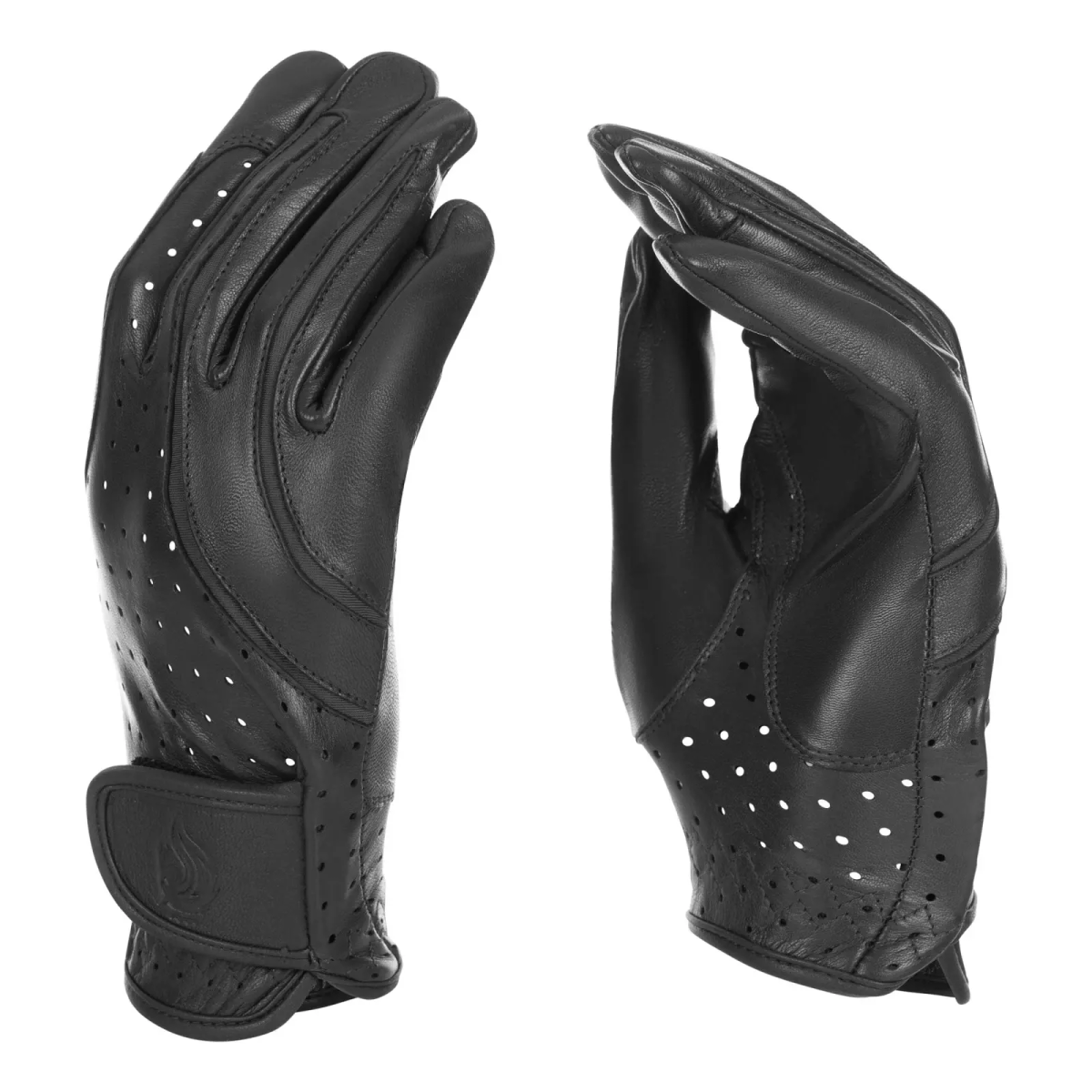
Everyday Gloves · Reliable Feel
Leather Riding Gloves
Around $35–$55
Equinavia → Shop Now*Affiliate link — we earn a small commission at no extra cost to you.
Breeches are worth getting right. Full-seat grip better in the saddle; knee-patch work for lower-contact riding. Fit matters more than brand — breeches that gap at the waist or bag at the knee shift as you ride, and the horse feels it.
Breeches, jodhpurs, and riding tights all look similar and do different jobs. If you're not sure which you need, the differences are worth understanding before you buy.
Boots come down to preference and stage. A tall boot gives clean contact; it's the longer-term investment, though some riders find tall boots less comfortable to school in. Paddock boots with half chaps get you started without the upfront cost — and plenty of riders simply prefer to train in them.
When you're ready to invest in a real pair, the right boot depends on your discipline — the differences are bigger than a beginner expects.
Your gear is only half the rider's side. What to wear, which discipline suits you, and how to keep improving all shape the rider you become — the rider's complete guide covers it.
First horse owner checklist
The essentials before your horse comes home: a properly fitted helmet, a saddle professionally fit to your horse, a mild snaffle bridle chosen with your trainer's input, a properly set-up stall, and your farrier, vet, and trainer already in place.
That stall matters more than it looks — bedding, water, ventilation, and safe fixtures all need to be right before the horse arrives, not after. Here's how to set one up properly.
Stall, pasture, and the rhythm of daily care
How your horse is kept — full board, pasture board, or self-care — shapes your daily life more than almost any other decision, and each option trades cost, control, and time differently. The right answer depends as much on the individual horse as on your schedule.
The board-versus-home question is a bigger fork than most first-timers realize. Weigh it honestly before you decide.
Whatever you choose, keeping a horse well is its own discipline — the setup, the daily routine, the health checks, and the long arc of ownership all connect. The full picture lives in one place.
Plan for a bare minimum of six to eight hours a week at the barn for a horse in regular work. Frequent, shorter visits build a stronger relationship than the occasional marathon day — and the barn is where you develop your eye for when something's off.
How the space itself is laid out makes every one of those hours easier or harder. A well-organized barn saves time on every chore and helps you catch trouble before it grows.
The people who will make or break your first year
You can have the right horse, the right board, and the right tack, and still have a hard first year without the right people. Three relationships matter most: your trainer, your farrier, and your veterinarian. Get referrals from other owners in your area before you commit — reputations are real, and a trusted recommendation beats a search result.
Of the three, the trainer shapes your first year the most, and the wrong one installs habits that take years to undo. Learn what actually separates a good instructor from a well-marketed one before you book a single lesson.
Your first year, month by month
The first year rarely unfolds the way you expect. There's an overwhelm phase, a finding-your-patterns phase, a setback phase, and — if you stay consistent — a shift somewhere around month six where the horse starts to feel genuinely familiar. By month twelve you understand things you couldn't have a year earlier, and you know exactly what you still don't. That's a far more useful place to stand than the certainty you probably started with.
What all of this actually costs
The honest annual number for horse ownership in the United States runs from roughly $8,000 on the low end to $20,000 and beyond, depending on your region, your board, and how actively you ride and show. That's not a scare number. It's a planning number. Here's where it goes:
Board. The single largest expense. Full board at a well-run facility runs from around $600 to $1,800 or more a month; pasture board is less — often around $200 to $600 — but shifts costs into other areas.
Farrier. Plan on roughly $50 to $250 per visit, every six to eight weeks. Shod horses cost more than barefoot; over a year, figure around $400 to $1,500.
Routine spring vaccinations. Annual shots — typically EEE/WEE, West Nile, tetanus, influenza, and rhino — run around $150 to $300 depending on your region and your vet's farm-call fee.
Coggins test. Required for travel, shows, and most boarding facilities. Usually around $30 to $75, once a year. Keep a current one on file at all times.
Dental floating. Sharp points get filed down once a year, sometimes twice for younger horses. A routine float under sedation runs around $150 to $400.
Deworming. Fecal egg counts with targeted deworming (the more precise, increasingly standard route) or a rotational schedule — plan on roughly $100 to $200 a year.
Feed and hay. Board often includes hay and sometimes grain, but many owners supplement. Supplying your own quality hay and any added grain can add around $100 to $300 a month.
Shavings. If your horse is stalled, bedding is either included or a separate line — roughly $7 to $12 a bag, replenished regularly.
Supplements. Anywhere from nothing (a well-balanced diet, a healthy horse) to around $300 or more a month (joint, metabolic, or hoof needs). Let your vet and farrier drive this, not marketing.
Horse care products. Fly spray, wound care, liniment, hoof oil, leather cleaner and conditioner, shampoo — plan on roughly $300 to $500 a year.
Trainer. Lessons typically run around $50 to $125 each; once a week is a reasonable minimum in active learning mode, so figure around $200 to $500 or more a month.
Horse shows or clinics. A one-day local show runs around $200 to $400 all-in. A rated weekend with stabling and coaching can run around $1,000 to $3,000 or more. Clinics are often more cost-effective and educational in the first year — plan on roughly $150 to $400 each.
Trailering. If your barn doesn't have a rig and driver on hand, factor in hauling for vet visits, shows, and off-property riding — local haulers typically charge around $75 to $200 a trip.
The costs that catch people off guard most reliably are the unplanned ones: emergency vet bills, a saddle that doesn't fit the horse you actually bought, a supplement added mid-year. Build roughly $2,000 to $3,000 of emergency reserve into your annual plan — not as a line item, as a cushion you protect.
Those are the yearly running costs. The upfront tack outlay is its own line to plan for — what a full setup actually runs, and where the money is worth spending.
Choosing a discipline — and letting your horse weigh in
Discipline isn't only a personal choice. It's a conversation between you and the horse.
The options are genuinely varied: dressage, hunter/jumper, eventing, western pleasure, trail riding, reining, endurance, polo, hunt seat, saddle seat, vaulting, driving, and more. Each asks different physical qualities of the horse, a different training foundation, and a different mindset from the rider.
If you're still deciding between the big three — dressage, hunter/jumper, and western — a side-by-side of what each demands and rewards makes the choice clearer.
Your interests matter, your goals matter — and so does your horse's body. A fluid, ground-covering trot and a sensitive mouth suggest dressage. Brave, scopey, and forward suggests jumping. Steady nerve and balance on varied ground suggests trails. Watch your horse move freely in a field before you decide what to do with him: how he carries himself, where his topline builds, how he uses his hindquarters. He's telling you something. Listen.
None of this replaces the work of training itself. Every discipline is built on the same foundation — a step-by-step scale that develops a horse from loose and rhythmic to balanced and collected. Understanding it changes how you read every lesson.
Not every horse can do every discipline, and asking one to work against his natural way of going for years invites both breakdown and constant resistance. A horse working within his strengths is more willing, sounder over time, and more satisfying to ride. If you plan to pursue something seriously, buying a horse bred for that work gives you a head start — a warmblood bred for dressage, a Quarter Horse with reining lines, an Irish Sport Horse with a jumping pedigree. That isn't snobbery; it's generations of purpose-breeding, and it means the horse is already partway there.
So think about direction before you fall in love. Ask what he's been trained in and what he's shown aptitude for, and let that conversation happen before the purchase, not after. If the discipline evolves later — a trail horse who turns out to love dressage, a hunter who wants to event — let it. The relationship comes first. The ribbon category is a distant second.
There's a moment that happens somewhere along the way — often when you don't expect it, in the middle of something ordinary.
You're brushing out a mane before a lesson. You're standing in the aisle while she eats, and she glances back at you, once, then goes back to her hay. You have a ride where everything lines up and you feel it — the thing people try to describe and never quite manage to.
That moment is what you're building toward. Not the ribbons, though those come. Not the clean diagonal or the balanced canter departure, though those come too. It's a relationship with an animal who weighs half a ton, has a memory like a steel trap, and has decided — over months of patient, consistent presence — that you're worth trusting.
That doesn't come from gear or ambition or the right barn. It comes from showing up, paying attention, and staying when nothing is going perfectly.
Whether this is your first horse, your fifth, or a return to something you set down years ago, the riders you admire earned it the same way — through the overwhelm, the setbacks, and the mornings when nothing clicked. They kept showing up, and the horse kept teaching.
You're at the start of one of the most demanding, most rewarding partnerships a person can have. Go in honestly. Go in humbly. Go in willing to be taught by an animal who will not lie to you. The rest builds itself.
The equestrian life beyond the barn
There's a quiet postscript to all of this — the way the life spills past the barn and into the rest of how you live. The horse changes more than your weekends. Spend enough mornings around leather, brass, worn wood, and good wool, and those materials start to follow you home — as a way of choosing things that are made well and meant to last. Even items from the barn itself, added to a room just right, can lift your space tenfold and make it feel like you.
This is the quiet, wonderful part of the equestrian life that nobody warns you about. A new waxed barn coat that makes its way into your out-of-barn wardrobe. The patina of well-kept bridle leather that you start looking for in a bag, a belt, a pair of boots. The instinct to buy once and buy well… Slowly, your rooms and your wardrobe begin to tell the same steady story your riding does.
You do not have to chase it. It arrives on its own, and when you're ready to bring that sensibility fully indoors — the heritage textures, the restraint, the pieces made to be handed down — the guide below walks you through living it, room by room and outfit by outfit.
Frequently Asked Questions
Should a first-time horse owner lease or buy?
Leasing first is almost always the smarter path. It's the next small step up from lessons, and it lets you learn what you actually want in a horse — temperament, discipline, energy level — before committing to ownership. The exception is if you've ridden seriously for years, have a trainer in place, and have found a well-trained horse that suits your level precisely. Even then, a trial period matters.
How much does it cost to own a horse per year?
Plan on roughly $8,000 to $20,000 a year depending on your region and board situation. That includes board, feed, farrier visits every 6–8 weeks, routine vet care and spring shots, Coggins testing, dental floating, deworming, and supplies. Trainer fees, show costs, and emergency vet bills add on top of that.
What is the best horse breed for a first-time owner?
It depends on your experience, your discipline, and your goals as a rider. Riders drawn to English disciplines tend to lean toward warmbloods and warmblood crosses; those in Western or pleasure riding usually lean toward Quarter Horses, prized for an even temperament and real patience with a green rider. But breed matters less than training level — on both ends of the reins. A confident, well-broke horse in the right discipline serves a new owner better than any bloodline, and a personality that genuinely fits yours matters just as much. Get those two things aligned, and you have the makings of a real partnership.
How many hours per week should you spend with your horse?
For a horse in regular work, plan for six to eight hours per week at the barn, bare minimum — riding, grooming, tack cleaning, and unhurried time just being present. If you're showing or in active training, that number climbs. Horses thrive on consistency, and irregular visits set back both the horse and the rider.
The Elevated Tack Room Lookbook
15 finds every equestrian actually needs — curated, tested, and worth every penny. Free when you join the list.
No spam. Unsubscribe anytime.
Done
You're on the list. Check your inbox — your guide is on its way.