
This article contains affiliate links. We earn a small commission on purchases at no extra cost to you.
Becoming an equestrian rider is less about any single purchase and more about how three things come together: what you wear, the discipline you ride, and the habits you build around every ride. This complete equestrian rider guide walks through all three at a high level — enough to orient you, with a clear path to go deeper on each piece when you are ready.
Riding is one of the few pursuits where your equipment, your education, and your relationship with a living partner all matter at once. Get one badly wrong and the other two can't fully make up for it. So the goal here isn't to make you an expert in a single sitting. It's to give you the map.
What a Complete Equestrian Rider Guide Should Give You
A good overview does two jobs. It tells you what actually matters, and it tells you what to ignore for now. The riding world is loud with opinions about gear, method, and the "right" way to do everything. Most of that noise is discipline-specific or preference dressed up as fact.
What holds across all of it: safety comes first, fit beats price, and consistent time in the saddle beats any shortcut. Keep those three in mind and the rest of this guide falls into place.
Dressing the Part: Apparel That Works
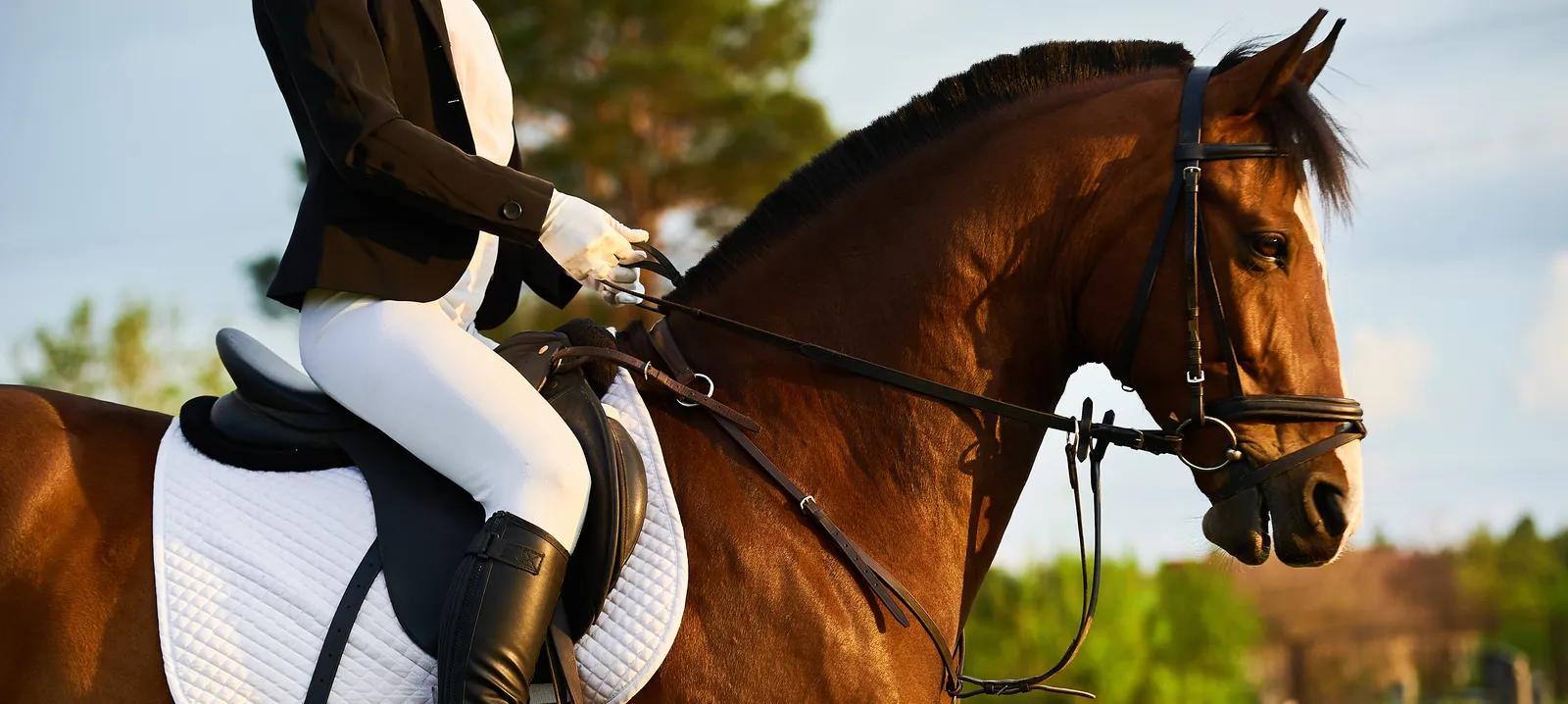
Riding apparel earns its place through function before looks. A helmet has to meet a real safety standard and sit correctly on your head. Boots need a heel to keep your foot from sliding through the stirrup, and a smooth inner leg to move against the saddle. Breeches or tights need to stay put and not bunch where you bend, for not only protection from chafing but protection from losing feel and contact with the horse. Everything past that is refinement.
The mistake most new riders make is buying for the aesthetic and discovering later that the pieces don't perform. The mistake experienced riders make is holding onto a mismatched wardrobe assembled over years of changing horses and disciplines. Both are fixable.
If you are staring at a closet full of pieces and never quite know what to reach for, the fastest fix is seeing real outfits built for real occasions — from a schooling session to a show morning to the drive home.
Before you can style outfits, though, you need a foundation of pieces worth building on — the ten or so items that everything else layers over. That is its own project, and worth doing deliberately.
Three garments cause more confusion than the rest combined: breeches vs. jodhpurs vs. riding tights. They look similar and get used interchangeably, but they are built for different jobs — and which one suits you shifts with your discipline, from a dressage test to a cross-country course. If you have ever stood in a tack shop unsure which you were holding, the full comparison is worth reading before you buy.
Boots deserve the same care. The right boot depends on what you ride and how — and the differences between disciplines are larger than a beginner expects.
Choosing a Discipline
Dressage, hunter/jumper, and western are the three lanes most riders in the United States encounter first, and each asks for something different from horse and rider. Dressage is precision and partnership on the flat. Jumping is athletic problem-solving over fences. Western covers a family of styles built around ranch work and quiet, responsive control.
None is a beginner discipline or an advanced one. They are different conversations with the horse, governed by different traditions and, at the competitive level, different rulebooks — the Fédération Équestre Internationale oversees the Olympic disciplines, while national federations set the rest. You do not have to commit forever. Most riders sample a few before one feels like home.
The full comparison — what each discipline rewards, what it demands, and how to tell which suits you — is worth reading before you sink money into discipline-specific gear.
The Foundations of Good Riding
Good riding looks effortless because the rider has made the mechanics automatic. Position, balance, and clear aids are the base. On top of that sits a framework classical training calls the training scale — a progression that takes a horse from loose and rhythmic to collected and responsive.
You do not need to master the theory to start riding well, but understanding the scale changes how you interpret every lesson. It gives a name to what your instructor is asking for and a reason behind the order they ask for it.
The scale has six elements, and each builds on the one before. Rather than compress that into a paragraph, we broke it down properly — what each stage means and why the sequence matters.
If you are coming to this as an adult, the path looks a little different from the pony-club route — timelines, expectations, and where to begin all shift. That deserves its own honest walkthrough.
Building the Partnership on the Ground
The best riders are made as much on the ground as in the saddle. Many stables offer lessons where the horse is already pre-tacked and ready to ride. To properly learn the horse, the safety protocols while working with a horse, getting experience grooming different kinds of horses, and building a trust and relationship with the horse, avoid a pre-tacked horse at all cost. If you are not interested in any of those activities, horseback riding is not for you. Not only are these skills important to learn with a trained professional, they build the groundwork for your entire equestrian journey. Groundwork for you is just as important as it is for your horse. Groundwork builds trust, teaches your horse to read you, and surfaces problems before they show up at speed. A horse that respects your space and reads your body language is a safer, more willing partner under saddle.
If you want a stronger connection with your horse, start with what you do before you ever pick up the reins.
That same attentiveness carries into the saddle. Reading your horse's mood before you mount can tell you whether today is a schooling day or an easy one — and it takes about ninety seconds once you know what to look for.
Getting Real Instruction
No guide replaces a good instructor. The right teacher accelerates everything and keeps you safe while you build habits that will last decades. The wrong one installs faults that take years to undo.
Finding a trustworthy instructor is a skill in itself, and it is worth being deliberate about — credentials, teaching style, and how they handle a nervous rider all matter. Organizations like the Certified Horsemanship Association certify instructors to a standard, which is a useful starting filter.
Before you book a single lesson, learn what actually separates a good instructor from a well-marketed one.
Before Every Ride
Consistency is what turns knowledge into skill, and a repeatable pre-ride routine is where consistency lives. Checking your tack, warming up your horse, and settling your own focus before you mount protects both of you and sets the tone for the whole session.
It sounds like a small thing. It is the difference between riders who progress steadily and riders who plateau, because the routine is where good habits get reinforced every single time.
If you want a routine worth copying — the order, the checks, the mindset — we laid ours out step by step.
Apparel, discipline, foundation, partnership, instruction, routine. Get those six working together and you are not just someone who rides. You are a rider. Everything else in this guide is depth on one of those six — follow the links as each becomes your next question.
Every one of those six assumes there is already a horse in your life to ride. If that part hasn't happened yet — if you are still weighing what ownership actually costs and asks of you — the complete first-time owner's guide is the place to start.
Frequently Asked Questions
What does a beginner rider actually need to buy first?
Start with the pieces that affect safety and position: a certified helmet that fits, a boot with a defined heel, and comfortable breeches or riding tights. Everything else can wait. Borrow or buy used while you learn what your discipline and your body actually ask for. The riders who buy a full wardrobe on day one usually replace half of it within a year.
How do I choose a riding discipline?
Choose based on what you want to feel, not what looks most impressive from the rail. Dressage rewards patience and precision. Hunter and jumper work rewards boldness and timing. Western rewards partnership and quiet control. Most riders try more than one before something clicks. The discipline you stay with is usually the one where the daily work and physical training appeals to you, not just the ribbons/show outfits.
How long does it take to become a competent rider?
Longer than most people expect, and that is not a discouragement. Riding is a physical conversation with an animal that weighs half a ton, and fluency comes from repetition, not talent. A year of consistent weekly lessons builds a real foundation. Comfort at the canter, an independent seat, and confidence can take a few years. The ability to read a new horse correctly, flow with their capabilities and still get the ride you want is a goal mastered over a lifetime of training.
Do I need expensive gear to ride well?
No. Fit and function matter far more than price. A well-fitted mid-range helmet protects your head as well as a premium one. Where quality pays back is in the pieces you use every ride for years — good boots, breeches that hold their shape, a jacket that outlasts trends. Spend there, and buy honestly everywhere else.
The Elevated Tack Room Lookbook
15 finds every equestrian actually needs — curated, tested, and worth every penny. Free when you join the list.
No spam. Unsubscribe anytime.
Done
You're on the list. Check your inbox — your guide is on its way.