
This article contains affiliate links. We earn a small commission on purchases at no extra cost to you.
The best leather horse tack comes down to three things you can check yourself: vegetable-tanned leather from a named tannery, solid brass or stainless hardware, and stitching you can see and count. This guide covers how to judge all three — across bridles, reins, and halters — and which pieces are genuinely worth the investment.
Why Leather Is Worth the Investment
Synthetic tack has its place. It's easy to clean, the price-per-year math works in its favour, and for a horse that lives outside in the rain, there's a practical argument for it. But if you spend any real time in the saddle — if you care about the feel of what's in your hands and on your horse's face — leather is in a different category entirely.
Good leather horse tack gets better with every ride. It softens and darkens and molds to the contours of your horse over months and years of use. A bridle that cost you twice as much as the synthetic version will still be in service a decade from now, and it will look infinitely better for having been used. The synthetic will be cracked and brittle in three years.
This is investment framing, and it's the right way to think about leather tack: cost per use, not cost at purchase. A $400 leather bridle used twice a week for ten years costs you less per ride than a $120 nylon one replaced every two years. The math and the aesthetics point in the same direction.
“Good leather tack gets more beautiful every year you use it. That's not sentimentality — that's value.”
Before diving into specific picks, here's where this post fits in a bigger picture: the guide to everything your horse actually needs in tack.
What Separates Good Leather from Bad Leather
The gap between good leather and bad leather in horse tack is wider than most people expect. Here's what actually separates them.
Tanning method
The two dominant methods are vegetable tanning and chrome tanning. Vegetable-tanned leather is what you want for bridles, halters, and reins. It's tanned using plant-based tannins, ages beautifully, takes conditioning oil well, and develops a deep patina over time. It's also stronger under repeated stress — important for any tack that's bearing load. Chrome-tanned leather is softer and more pliable out of the box, but it doesn't age the same way and is more susceptible to cracking when it dries out.
Hide origin
The best English leather tack is traditionally made from hides sourced in England or continental Europe, where cattle breeds and processing methods have been refined for centuries for exactly this purpose. Sedgwick's in England and Hermann Oak in the United States are the two tannery names you'll see referenced by the best saddlers in the world. When a brand specifies their leather source, that's a good sign. When they don't mention it at all, ask.
Thickness and temper
Quality leather tack has a consistent thickness throughout — you shouldn't find thin spots where the hide was stretched. Run your hand along the length of a rein or cheekpiece and feel for any variation. The temper (the firmness of the leather) should feel substantial but not stiff. If it feels papery or plasticky, it's low-grade.
Stitching
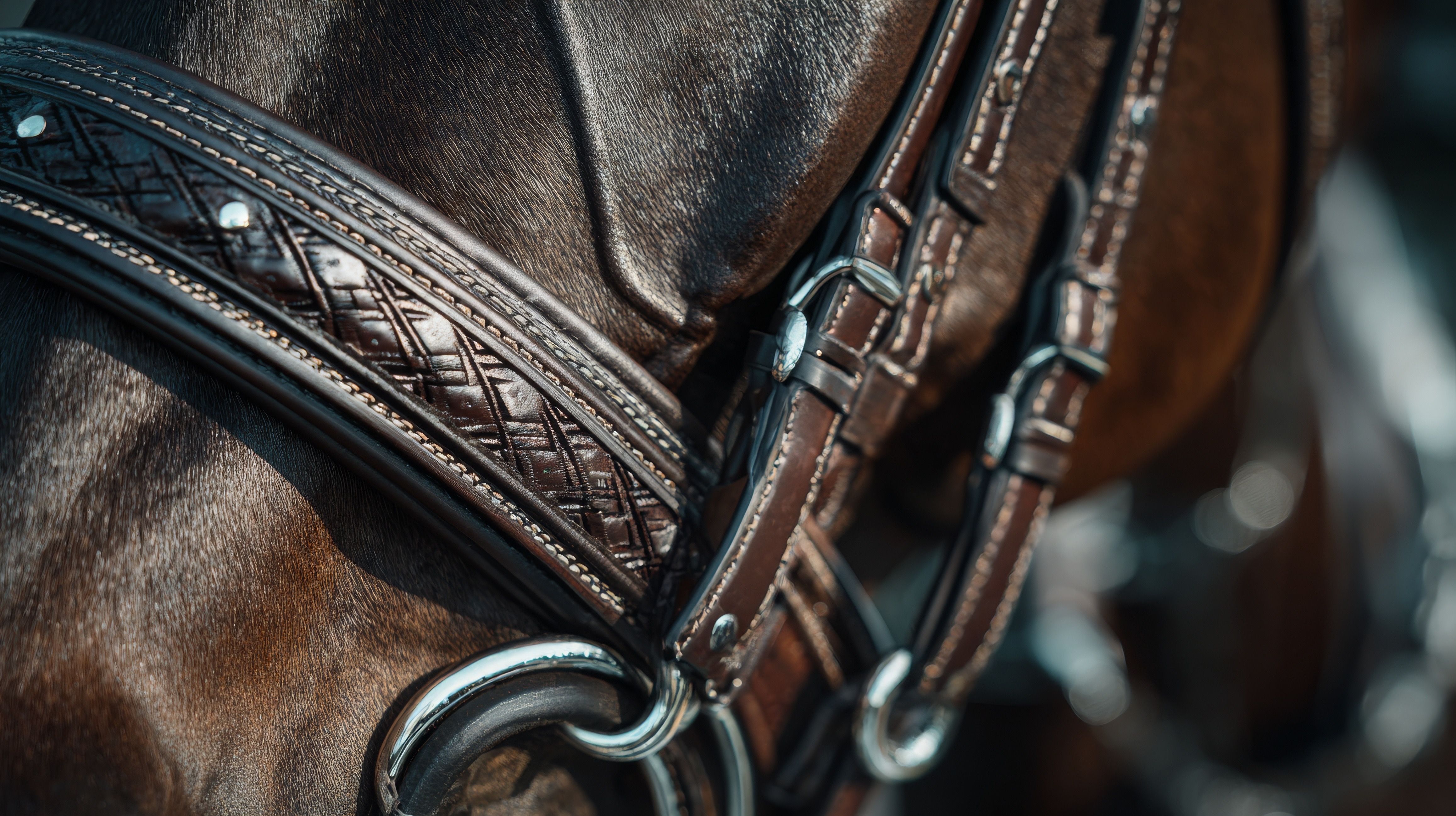
Look at the stitching closely. It should be tight, even, and recessed slightly into the leather — not sitting proud on the surface where it can catch and abrade. Waxed linen thread is the traditional standard and will outlast the leather. Nylon thread is acceptable but watch for fraying at stress points. Loose or skipped stitches anywhere are a dealbreaker.
Hardware
Solid brass or stainless steel only. Nickel-plated hardware is the budget shortcut — it looks identical at first, but it corrodes, pits, and leaves green stains on the leather within a season. If the hardware feels lightweight in your hand, it probably is.
Quick Reference
- Our Top Choice — Equinavia Saga Fancy Stitched Hunter Bridle
- Best for the Ring — Horze Somerset Fancy Show Bridle
- Best Halter — Equinavia Valkyrie Triple Stitched Leather Halter
The Best Leather Bridles
The bridle is the most visible piece of tack on your horse's face and one of the most important investments you'll make. A good leather bridle should fit cleanly, rest quietly, and last for years without losing its integrity.
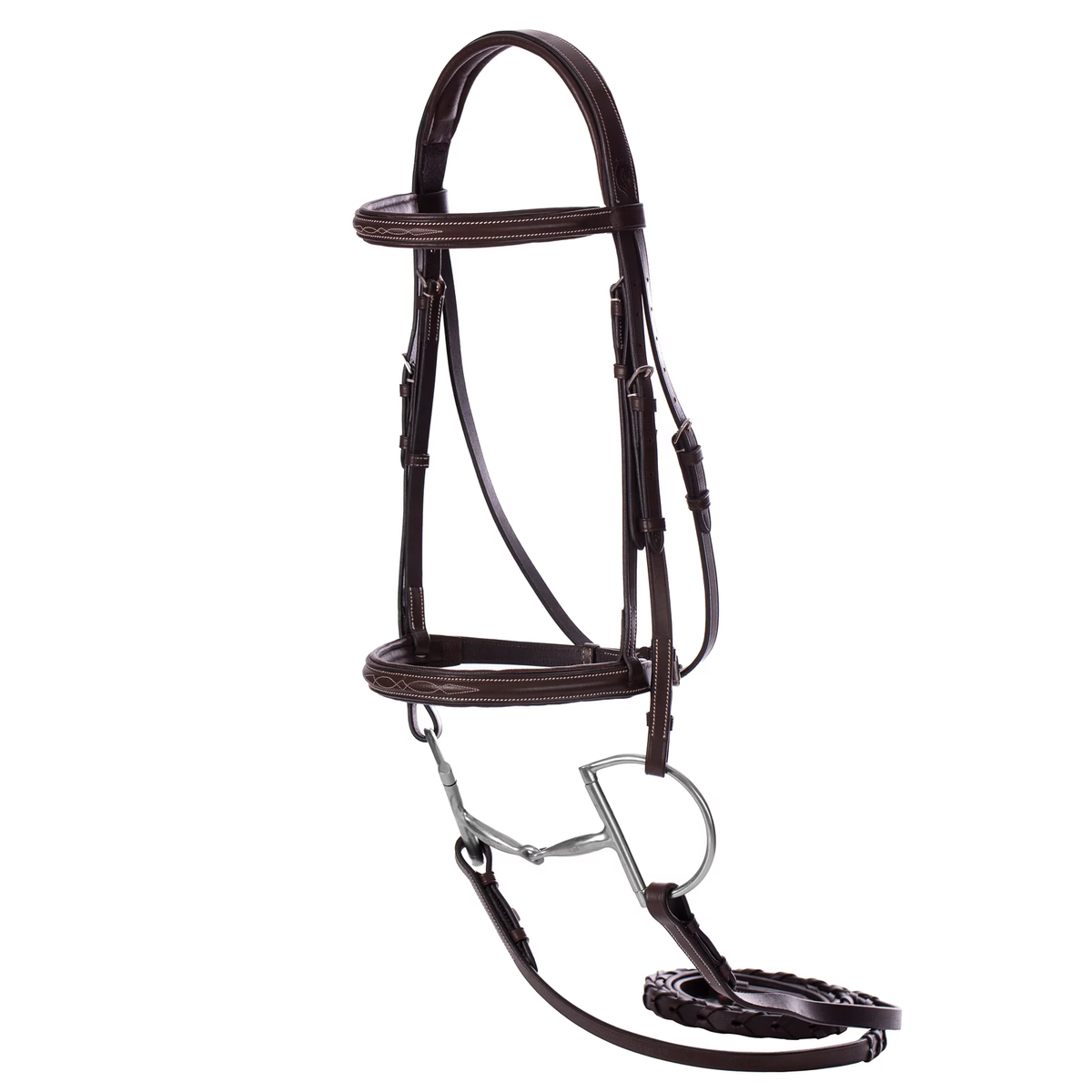
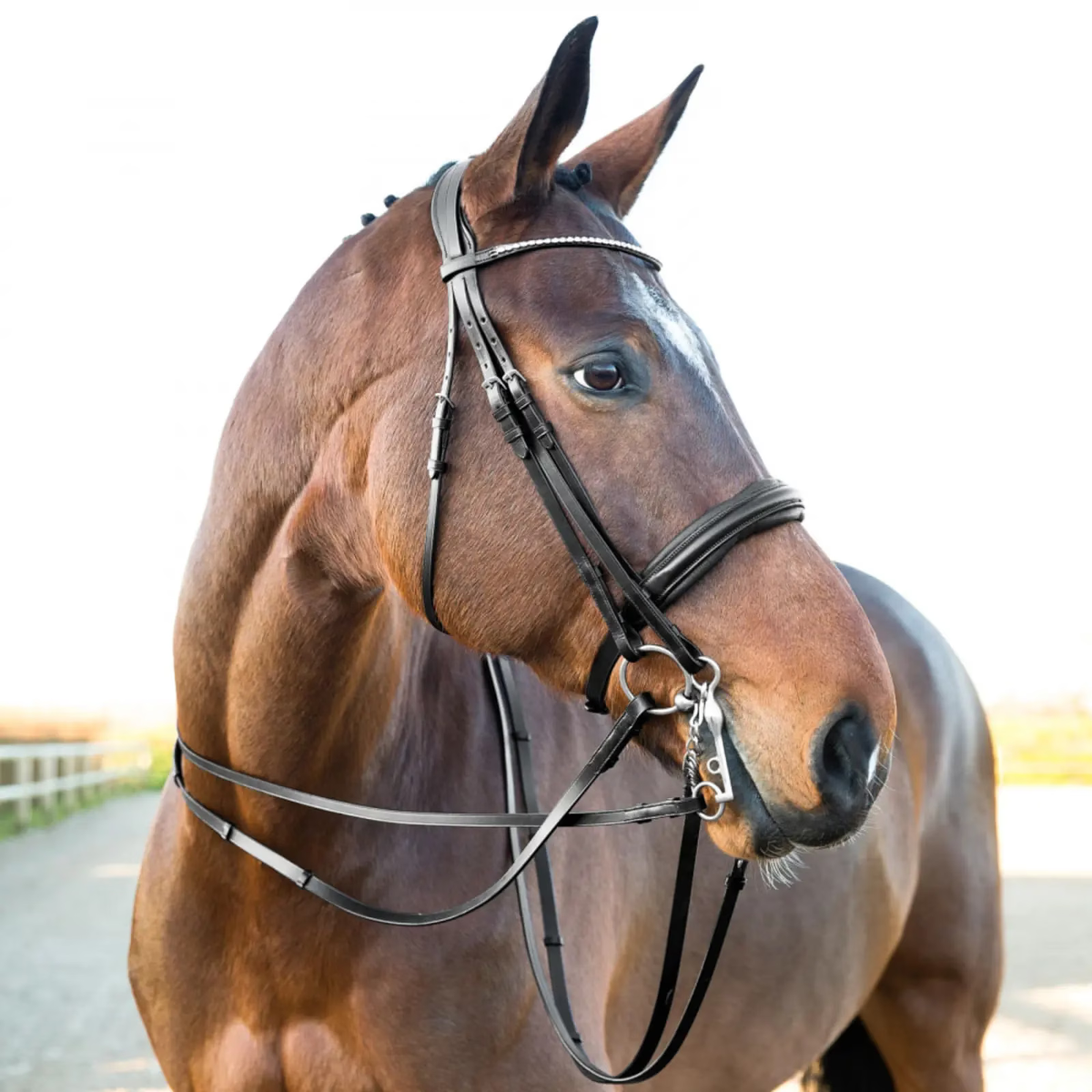
For everyday use, look for a single or double-stitched raised or flat raised design in a medium-weight leather. The cheekpieces, browband, and noseband should all be cut from the same hide for visual consistency — you'll notice when they're not. The bit attachments and keepers should be secure, and the buckles should adjust smoothly without binding. The Equinavia Saga Fancy Stitched Hunter Bridle hits every one of those marks — and it comes with reins, which matters when you're outfitting from scratch.
Our Pick · Everyday Bridle
Equinavia Saga Fancy Stitched Hunter Bridle & Reins
From ~$110
Equinavia → Shop Now*Affiliate link — we earn a small commission at no extra cost to you.
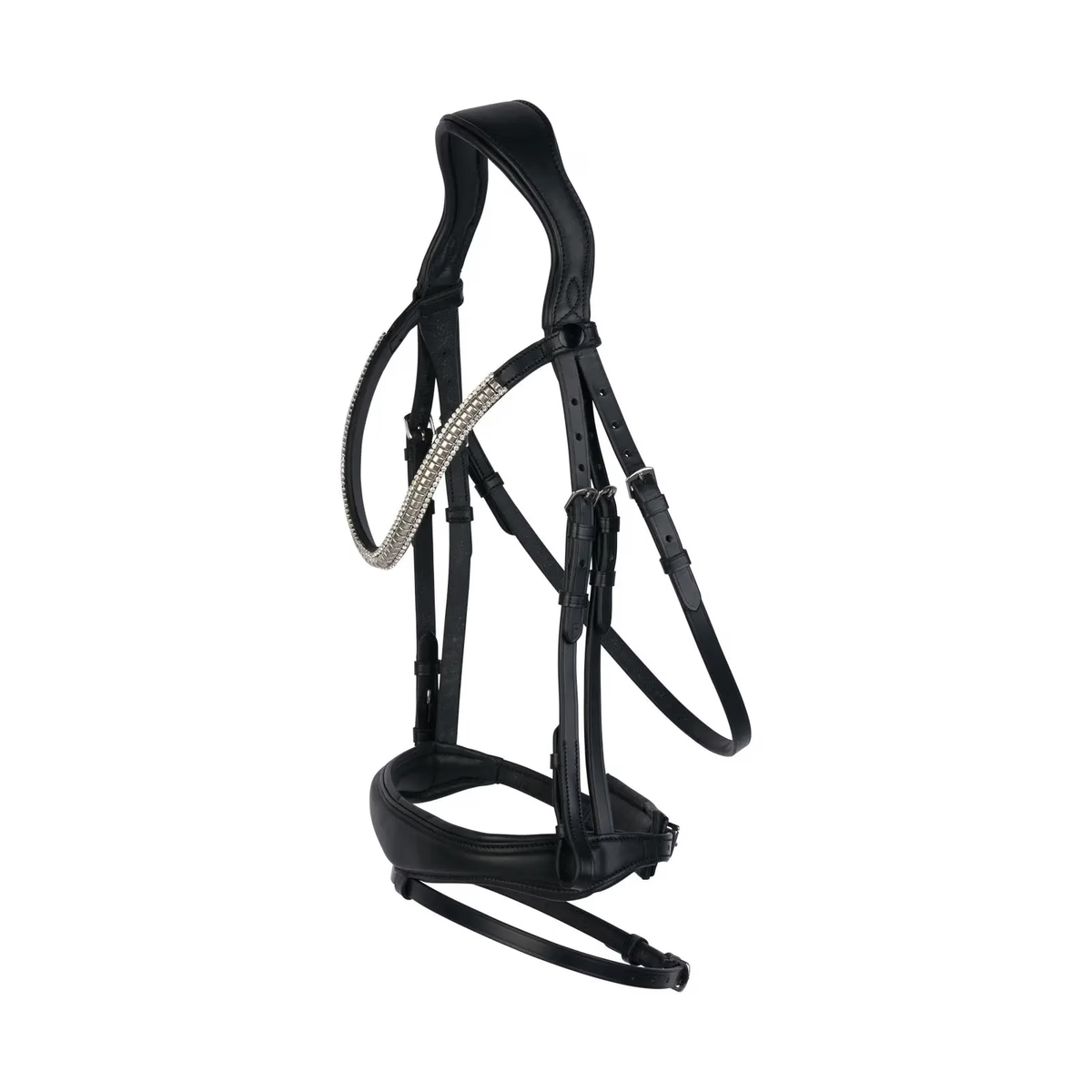
If your horse is headed to the ring, the Horze Somerset is where the look steps up. Rhinestone browband, soft nappa leather, anatomic cut padded at nose and neck — it's show-ready out of the box without being fussy. The snap-button browband is a practical detail that gets overlooked: it takes two minutes to swap in a plain band for schooling days. Reins are not included, so plan to pair it with a leather rein in a matching weight.
Show Pick · Hunter / Sport Horse
Horze Somerset Fancy Show Bridle
From ~$150
Horze → Shop Now*Affiliate link — we earn a small commission at no extra cost to you.
The Best Leather Halters
A leather halter is one of those purchases that divides the equestrian world sharply. Half the barn uses nylon because it's easy and cheap. The other half uses leather because they know that in a turnout emergency, a leather halter will break before your horse's neck will. That's not a small thing.
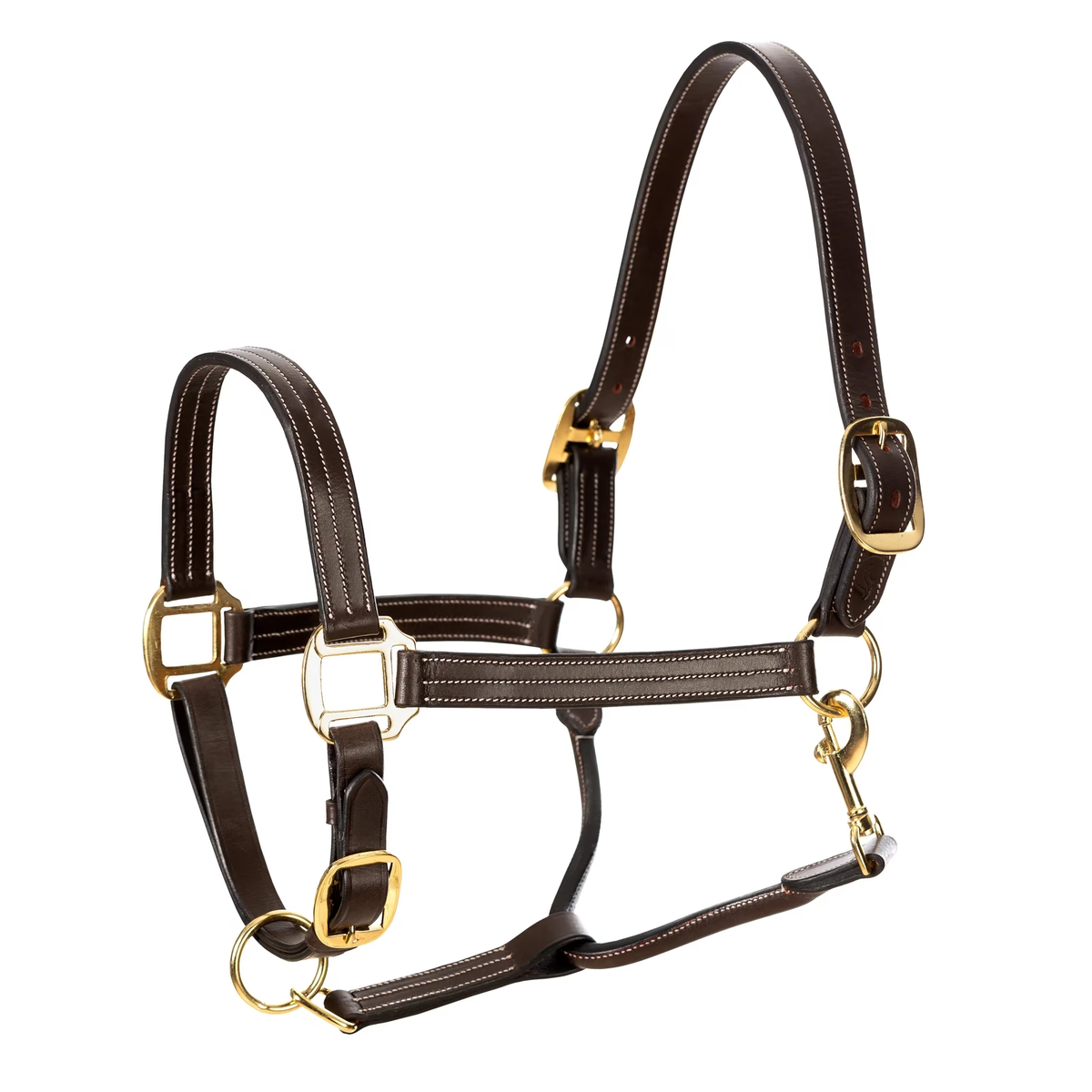
Beyond safety, a well-fitted leather halter simply looks better — and on a horse with a finely made head, the difference is striking. Quality leather halters are also more comfortable for horses worn over long periods, as the material breathes and softens against the skin rather than chafing. The Equinavia Valkyrie Triple Stitched Leather Halter is our pick — built to the same standard as the Valkyrie bridle line, with brass hardware throughout.
The bridle and halter are just part of the equation. The other major piece of leather touching your horse every ride is the saddle — and fit matters just as much there.
Our Pick · Leather Halter
Equinavia Valkyrie Triple Stitched Leather Halter
From ~$90
Equinavia → Shop Now*Affiliate link — we earn a small commission at no extra cost to you.
A leather halter pairs naturally with a leather lead — and for the same reason. A leather lead has enough give to absorb sudden pressure without transferring all of it to your hand, and it ages the same way the halter beside it does. The Equinavia Valkyrie Leather Lead Shank is the natural companion to the Valkyrie halter — same collection, same brass hardware, same quality of construction.
Reins, Breastplates & Supporting Pieces
Once your bridle and halter are sorted, the supporting leather pieces are worth getting right too. Reins are arguably the most tactile piece of tack you own — you feel them constantly, and the quality of the leather has a direct effect on your feel and communication.
Reins
Flat leather reins are the classic choice and require almost nothing by way of maintenance — wipe them down, condition them occasionally, and they'll last for years. For dressage and snaffle work, reins with leather stops give you a tactile reference point without rubber bulk — particularly useful for beginners finding an even contact. The Horze Laelia Leather Reins with Stops are our pick here: classic cut, well-placed stops, and a weight that pairs cleanly with the Saga bridle family. Buy your reins in the same leather as your bridle. Mismatched leather tones and finishes are the quickest way to make expensive tack look cheap.
Breastplates and martingales
If your horse needs a breastplate, leather is the only choice worth making. It has more give than synthetic under sudden pressure, ages gracefully, and looks significantly better in the ring. The Equinavia Saga 5-Point Breastplate is the natural pairing if you're already in the Saga bridle — same leather family, same brass hardware, and the five-point fit keeps it sitting correctly on horses that tend to pull a standard three-point off-centre. A standing martingale in leather with a matching breastplate is a combination that has looked correct in every discipline for a hundred years and will continue to.
Reins
Horze Laelia Leather Reins with Stops
Shop Now →
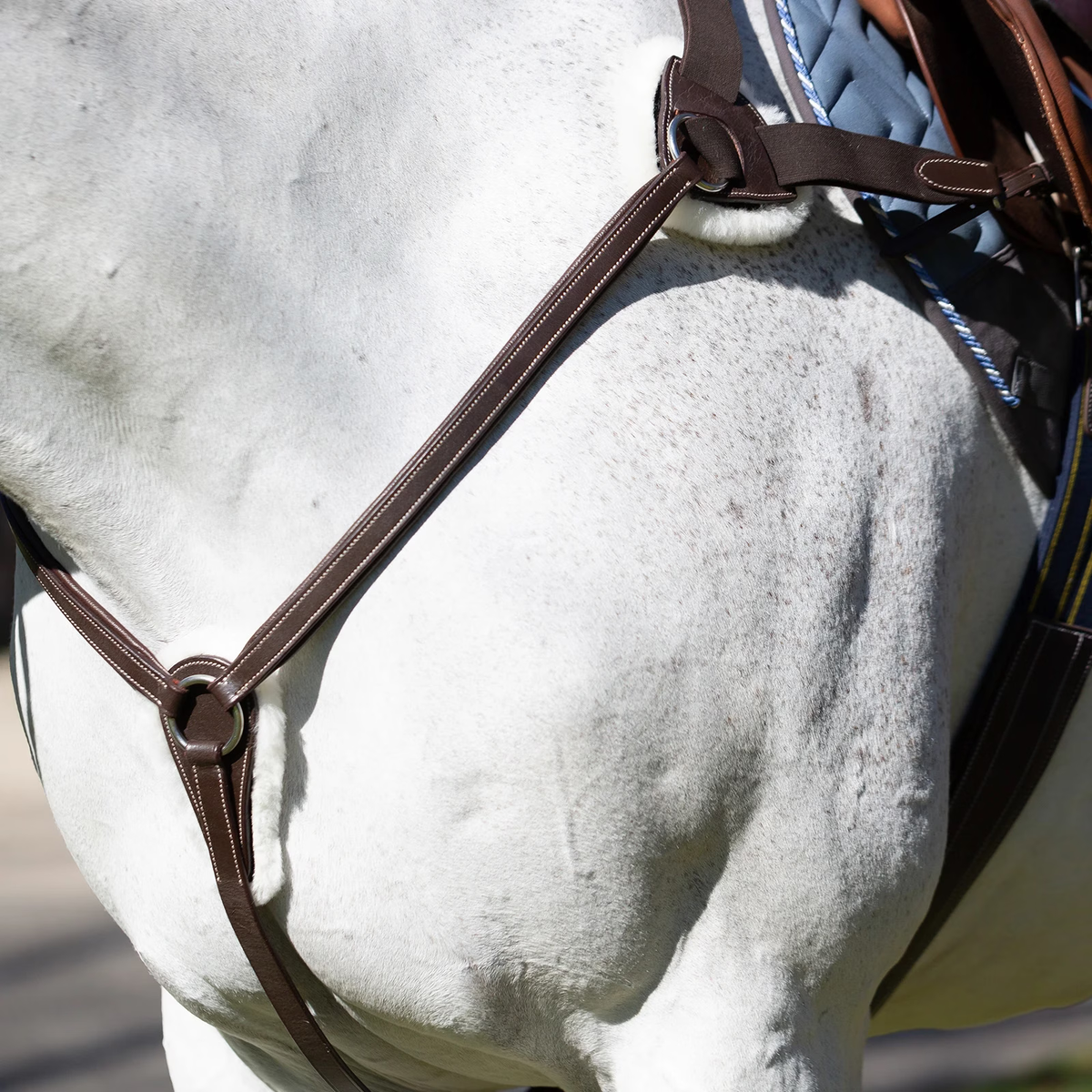
Breastplate
Equinavia Saga 5-Point Breastplate
Shop Now →
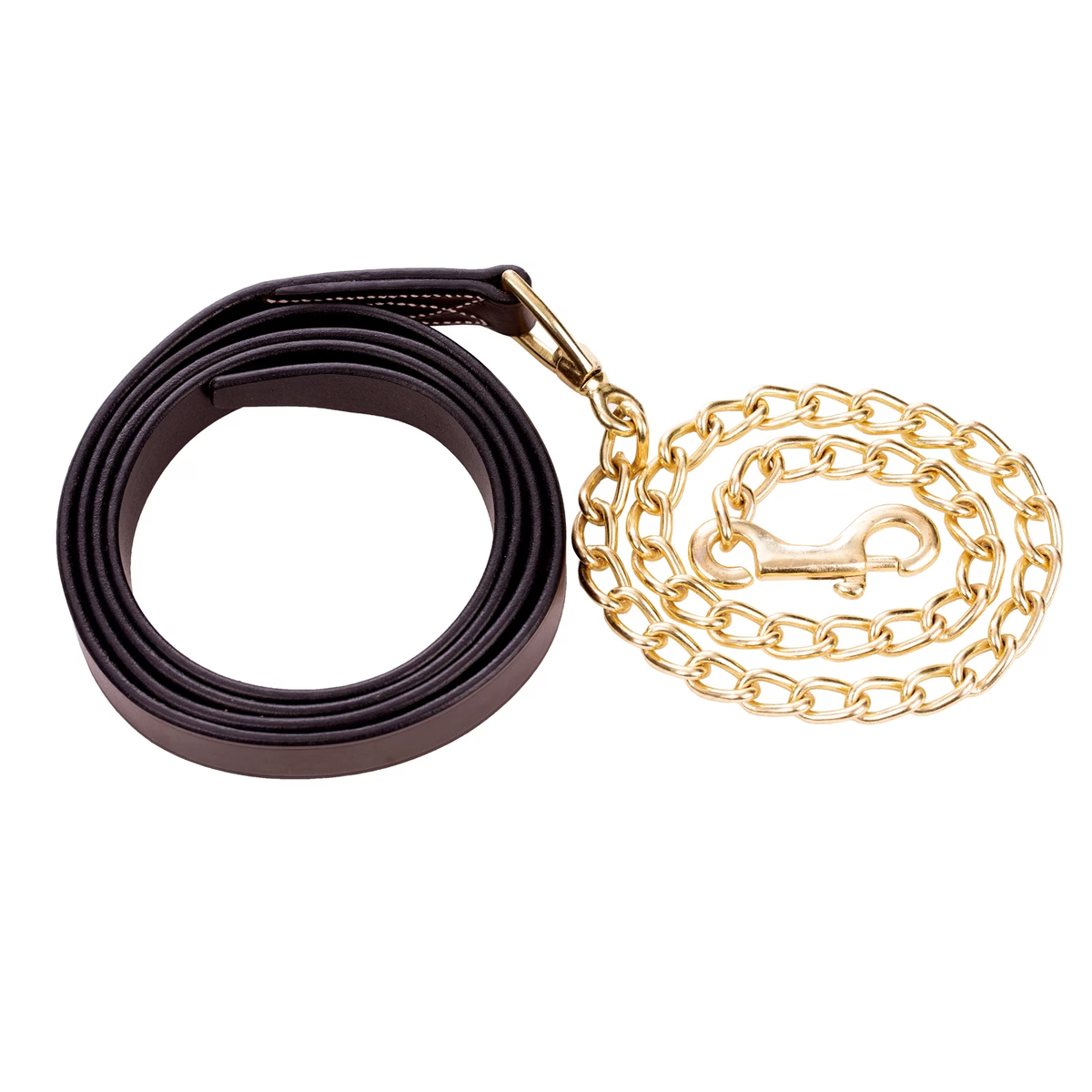
Lead Shank
Equinavia Valkyrie Leather Lead Shank
Shop Now →
Once you've invested in quality leather, how you care for it matters just as much as what you bought. The right cleaning and conditioning routine extends the life of a bridle or saddle for decades — and the wrong products can degrade it in a season. Everything you need to know about caring for leather tack is in the guide below.
Frequently Asked Questions
What is the best leather for horse tack?
Vegetable-tanned leather sourced from quality hides is the gold standard for horse tack. The two most respected tanneries in the world for equestrian leather are Sedgwick's in England and Hermann Oak in the United States. When a saddler names their leather source, that's a mark of confidence in the product. Look for consistent thickness, tight grain, and hardware in solid brass or stainless steel.
Is leather or synthetic tack better?
For durability, feel, safety, and aesthetics, quality leather outperforms synthetic in every category over time. Synthetic tack is easier to clean and more affordable upfront, but it degrades faster and offers less feel. The exception is turnout situations in heavy rain, where easy-care synthetic has a practical advantage. For riding tack — bridles, reins, breastplates — leather is worth the investment.
How long does leather horse tack last?
With proper care, quality leather horse tack can last 20–30 plus years. A good bridle from a reputable saddler, cleaned after every ride and conditioned weekly, should outlast multiple horses. The leather will soften, darken, and develop a patina over time — which is not wear, it's character. Poor-quality leather, regardless of care, will typically last 3–5 years before cracking and delaminating.
What should I use to condition leather horse tack?
Effax Leather Balsam, Passier Lederbalsam, and Leather Therapy Conditioner are all excellent choices. Apply a small amount with a soft cloth after cleaning, work it in with circular motions, and buff off any excess. Condition weekly under regular use. Avoid over-conditioning — leather should feel nourished, not greasy. Never use petroleum-based products.
How do I know if leather tack is good quality?
Look for: consistent thickness throughout with no thin or stretched spots, tight and even grain on the surface, stitching that is tight and slightly recessed, solid brass or stainless hardware that feels substantial in hand, and a named leather source from the manufacturer. Good leather has a clean, slightly sweet smell. Bad leather often smells chemical or plasticky.
The Elevated Tack Room Lookbook
15 finds every equestrian actually needs — curated, tested, and worth every penny. Free when you join the list.
No spam. Unsubscribe anytime.
Done
You're on the list. Check your inbox — your guide is on its way.