
This article contains affiliate links. We earn a small commission on purchases at no extra cost to you.
The Arabian horse's pros and cons are sharper than most breeds': extraordinary endurance, intelligence, and loyalty on one side; sensitivity and fire that demand the right rider on the other. Here's the honest picture before you fall for the breed.
Every serious equestrian has an opinion about Arabians. Usually a strong one. They are too hot, too sensitive, too much horse for most people — or they are the most intelligent, most loyal, most breathtaking animal you will ever sit on. Both camps are right. The Arabian is not a breed that meets you in the middle.
What the Arabian is, without argument, is ancient. Over 4,500 years of selective breeding in the Arabian Peninsula produced a horse shaped by scarcity — of water, of feed, of shade — and by the demands of Bedouin life, where the horse slept in the tent and the relationship between horse and human was, quite literally, survival. That history is written into the breed's genetics. It explains nearly everything about them: the endurance, the intelligence, the sensitivity, the fire.
This guide will not tell you Arabians are for everyone. They are not. But if you are the right match, there is no other breed quite like them.
A Breed Born in the Desert
The Arabian is one of the oldest and most recognizable horse breeds in the world. The Bedouin tribes of the Arabian Peninsula developed the breed with extraordinary intentionality — selecting for stamina, soundness, and an almost preternatural bond with humans. Mares, in particular, were prized: a Bedouin warrior trusted his mare's instincts, her silence under pressure, her ability to go further on less than any other animal.
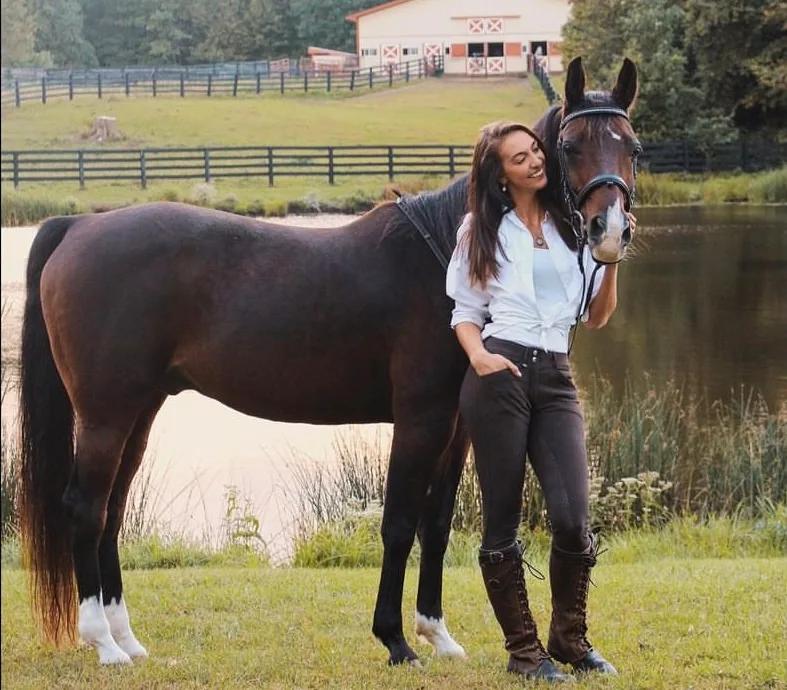
What emerged from centuries of this selective pressure is a horse with a distinctive dished profile, a high tail carriage, large dark eyes, and an arched neck that telegraphs energy even at rest. The domed forehead — the jibbah — was believed by the Bedouin to be a mark of divine blessing. The broad, arched ribcage carries more lung capacity than most breeds, and the naturally shorter back (Arabians typically have one fewer lumbar vertebra) contributes to both soundness and agility.
Today, Arabian blood underpins almost every modern light horse breed. The Thoroughbred — three of the founding sires were Arabian stallions. The Quarter Horse, the Standardbred, the Morgan. The Arabian has shaped the equestrian world more than any other single breed. That legacy matters when you are deciding whether to bring one into your barn.
“The Bedouin trusted his mare's instincts, her silence under pressure, her ability to go further on less. That horse is still in every Arabian alive today.”
The Strengths of the Arabian
Endurance That Is Genuinely Unmatched
The FEI World Endurance Championship is, effectively, an Arabian showcase. Arabians and Arabian crosses dominate the sport globally, and it is not close. Their structural efficiency — the deep chest, the dense bones, the high ratio of red blood cells — means they recover faster, carry fatigue differently, and sustain aerobic effort over distances that compromise other breeds. If you trail ride seriously, compete in endurance, or want a horse who can go all day and ask for more, the Arabian has no equal.
Intelligence That Cuts Both Ways
Arabians are smart. Not in a performance-of-tricks way — in a watching-you, cataloguing-information, forming-opinions way. They remember kindness and they remember unkindness with equal fidelity. A well-handled Arabian will learn patterns faster than most horses, respond to subtle aids, and develop a genuine working partnership with a rider they respect. The intelligence that makes them brilliant also makes them bored by repetition and quick to notice inconsistency in their handler.
Longevity and Soundness
The Bedouin bred for horses who lasted, and they succeeded. Arabians routinely compete well into their twenties. Their dense, hard hooves require less frequent farrier intervention than many warmbloods. Their metabolic efficiency means they maintain weight on modest forage. Soundness varies by individual, but as a breed, Arabians have a strong track record — which matters enormously when you are making a 25-year commitment.
The Bond
This is harder to quantify but impossible to ignore. Arabians are not indifferent to their people. They form attachments that are specific, loyal, and demonstrated daily. Owners describe the experience of being chosen by their Arabian — the horse who meets them at the gate, who positions their head for scratching in exactly the right spot, who whinnies for no one else in the barn. It is not sentimentality. It is a breed characteristic, selected for across millennia by people whose survival depended on it.
Strengths
- Exceptional endurance and stamina
- Intelligent, fast-learning partnership
- Longevity — competitive well into their 20s
- Strong, hard hooves; metabolically efficient
- Deep, loyal bond with their person
- Naturally elevated, expressive movement
- Versatile across disciplines
Considerations
- High sensitivity — amplifies rider tension
- Not suited to passive or inconsistent handling
- Boredom leads to behavioral problems quickly
- Can be reactive in new environments
- Prone to HYPP (in some bloodlines) and skin sensitivity
- May challenge a less experienced rider
- Separation anxiety is common
What You Need to Know First
Sensitivity Is a Feature, Not a Bug — If You Are Ready for It
An Arabian will feel everything you bring to the saddle. A tense seat, a distracted ride, a harsh correction — none of it goes unnoticed. This is not a deficiency. In the hands of a calm, consistent, technically correct rider, that sensitivity becomes responsiveness so fine it approaches telepathy. In the hands of a rider who is still working through their own anxiety, or who relies on force over subtlety, it becomes a difficult horse. Honestly assess which rider you are before you fall in love with a particular grey mare.
They Need Work — Consistent, Meaningful Work
An under-stimulated Arabian is a problem-solving Arabian. They will find ways to entertain themselves that you will not enjoy. Weaving, cribbing, fence-walking — these are not vices in the traditional sense; they are symptoms of a horse whose brain has been left idle. Arabians thrive in programs that include regular riding, variety in their work, and ideally turnout with suitable companions. A horse in a stall twenty-three hours a day is a horse being set up to fail.
Health Considerations Worth Understanding
A handful of hereditary conditions appear in Arabian bloodlines at higher rates than in the general horse population. Severe Combined Immunodeficiency (SCID) and Cerebellar Abiotrophy (CA) are the two most significant — both are recessive, and both can be screened for with genetic testing before purchase. Responsible breeders test their breeding stock; if you are buying a foal or young horse, ask for documentation. Lavender Foal Syndrome and Arabian Fading Syndrome are rarer but worth knowing. None of these should dissuade you from the breed — they should inform your pre-purchase process.
On the maintenance side: Arabians can be sensitive to environmental allergens and strong UV exposure, particularly around the eyes and muzzle (pink-skinned Arabians especially). Quality fly protection and UV-blocking fly masks are not optional extras in summer — they are basic care.
The Bridle & Burlap Almanac
The Breed Guides. The Tack Reviews. The Things Worth Knowing.
Delivered to your inbox — no noise, no filler. Just the editorial you actually want to read.
Best Disciplines for Arabians
Endurance Racing
This is their native domain. At 50 and 100-mile competitive distances, Arabians are not just competitive — they are the standard by which the sport is organized. If endurance riding is anywhere in your future, start here.
Competitive Trail Riding
The breed's stamina, sure-footedness, and metabolic efficiency translate directly to the trail. Arabians navigate technical terrain with an intelligence that many larger, heavier breeds simply cannot match. They pick up their feet. They assess footing. They are not horses who shuffle through a trail ride — they engage with it.
Show Hack and Open Halter
The breed show circuit exists in part because of how Arabians move. The naturally elevated trot, the arched neck, the presence — these are qualities that do not have to be manufactured. A well-bred, well-presented Arabian in a halter class is a genuinely remarkable thing to watch.
Dressage
Increasingly, Arabians and Half-Arabians are finding success in dressage. They are not the warmblood of the sport, and they will not match a Dutch Warmblood for raw suspension in the medium trot. But their sensitivity, suppleness, and willingness to engage make them capable and sometimes exceptional dressage horses, particularly through the lower and middle levels.
Hunt Seat and Eventing
Arabian crosses — particularly with Thoroughbreds — produce excellent event horses. The Arabian's bravery on cross-country, combined with the Thoroughbred's scope, makes for a competitive combination. Pure Arabians can and do event, though rider fitness and horse education need to be solid before presenting them at anything above introductory level.
What Ownership Actually Looks Like
A good Arabian is a horse you will spend years getting to know. The first season is often the hardest — they are reading you as carefully as you are reading them, and they are quicker studies. Experienced Arabian owners will tell you that the horse you have in year three is not the horse you had in year one. The relationship builds into something genuinely extraordinary, but it requires patience in the early going.
Turnout matters more with Arabians than with many other breeds. A horse who lives in a stall between rides is a horse whose tension accumulates. Where at all possible, consistent daily turnout — ideally with a companion — makes for a more settled, more rideable horse. This is not a breed you can manage into quietness with confinement.
Feed management is worth getting right. Arabians are metabolically efficient — which is an asset under endurance conditions and a potential liability in a well-stocked modern barn. They can become overweight easily, and excess weight on an Arabian often manifests in increased reactivity and, over time, increased metabolic risk. A good equine nutritionist is a worthwhile investment at the start of ownership.
Finally: find a trainer who knows the breed. An Arabian is not a slow warmblood, and training approaches that work well for stoic, food-motivated breeds often backfire spectacularly with an Arabian. Positive reinforcement, clarity, variety in training, and genuine respect for the horse's intelligence are not just nice-to-haves — they are the methodology that actually works.
The Honest Assessment
Is an Arabian the Right Horse for You?
Buy an Arabian if you are a confident, consistent rider who values sensitivity over predictability. If you want a horse who is a genuine partner — one with opinions, memory, and loyalty — this breed will give you that in abundance. If you trail ride seriously, compete in endurance, or are drawn to a horse with genuine presence and history, the Arabian delivers on every count.
Wait on an Arabian if you are still developing your independent seat, if you need a horse who self-regulates in chaotic environments, or if your schedule does not allow for consistent work and meaningful turnout. None of these are permanent disqualifiers — they are honest prerequisites for a good outcome with this breed.
The Arabian is not the easiest horse you will ever own. It may well be the best.
The Barn
The Thoroughbred Off the Track: What Every Owner Should Know
Care & Keeping
The Equestrian's Guide to Choosing a Feed Program That Lasts
Frequently Asked Questions
Are Arabian horses good for beginner riders?
Not always — and not because they're dangerous, but because they're sensitive. Arabians respond to every shift in seat, leg, and hand, which means they amplify both good riding and inconsistent riding. A nervous or unbalanced beginner will find that tension escalates quickly. That said, a more trained, experienced Arabian can actually help beginner riders develop some of the best habits and seats in the discipline — precisely because of that sensitivity. Greener Arabians belong with experienced riders and a trainer nearby. As a general rule, the breed rewards riders who come to them with a quiet, steady position.
What are the biggest downsides of owning an Arabian horse?
The sensitivity that makes them brilliant partners can also make them genuinely challenging to manage. They notice everything — a plastic bag at the fence line, a change in routine, a new horse in the next stall — and they respond. They also need consistent work and mental stimulation; an under-stimulated Arabian tends to invent its own entertainment, and that rarely goes well. They can also be food-sensitive, prone to digestive issues, and require careful management around rich pasture and high-starch feeds.
How long do Arabian horses live compared to other breeds?
Arabians are one of the longest-lived horse breeds. It's not unusual for a well-cared-for Arabian to remain active well into their late twenties, and horses living into their thirties are more common in this breed than most. Their longevity is one of the reasons endurance riders favor them — an Arabian can still be competing at twenty-two in a way that most warmbloods simply can't. The commitment is long, and so is the partnership.
Are Arabians good trail horses?
They can be exceptional ones — with the right individual and the right rider. Their stamina, natural sure-footedness, adaptability, and intelligence make them well-suited to long days on the trail. The caveat is experience: an Arabian on an unfamiliar route with wildlife, unpredictable footing, and a tense rider can be a different experience entirely. Arabians who trail ride regularly tend to settle into it well; the breed rewards consistency and exposure.
Why are Arabian horses so expensive?
Purchase price varies enormously — you can find well-bred, well-trained Arabians at every price point, from a few thousand dollars to well into eight figures for show-quality bloodlines. What drives the higher end is primarily breeding and show record. Straight Egyptian bloodlines, National champion lineage, and proven endurance records all command premiums. That said, the breed is large enough that a sound, well-tempered Arabian with solid training is more accessible than many people assume. The real cost of ownership — feed, farrier, veterinary care — is comparable to any other horse of similar size.
What disciplines are Arabians best suited for?
Endurance riding is where the breed genuinely dominates — the Tevis Cup and most major international endurance events are won almost exclusively on Arabians and Arabian crosses. Beyond endurance, they excel in halter and breed showing, English pleasure, western pleasure, costume, saddle seat, dressage, hunt seat, show hack, cross country, equitation, jumping, and trail classes. Arabians are one of the most diverse breeds in existence — capable of adapting to multiple disciplines and excelling in them at high levels. Once they bond with their rider, nothing is out of their reach.
The Elevated Tack Room Lookbook
15 finds every equestrian actually needs — curated, tested, and worth every penny. Free when you join the list.
No spam. Unsubscribe anytime.
Done
You're on the list. Check your inbox — your guide is on its way.