
This article contains affiliate links. We earn a small commission on purchases at no extra cost to you.
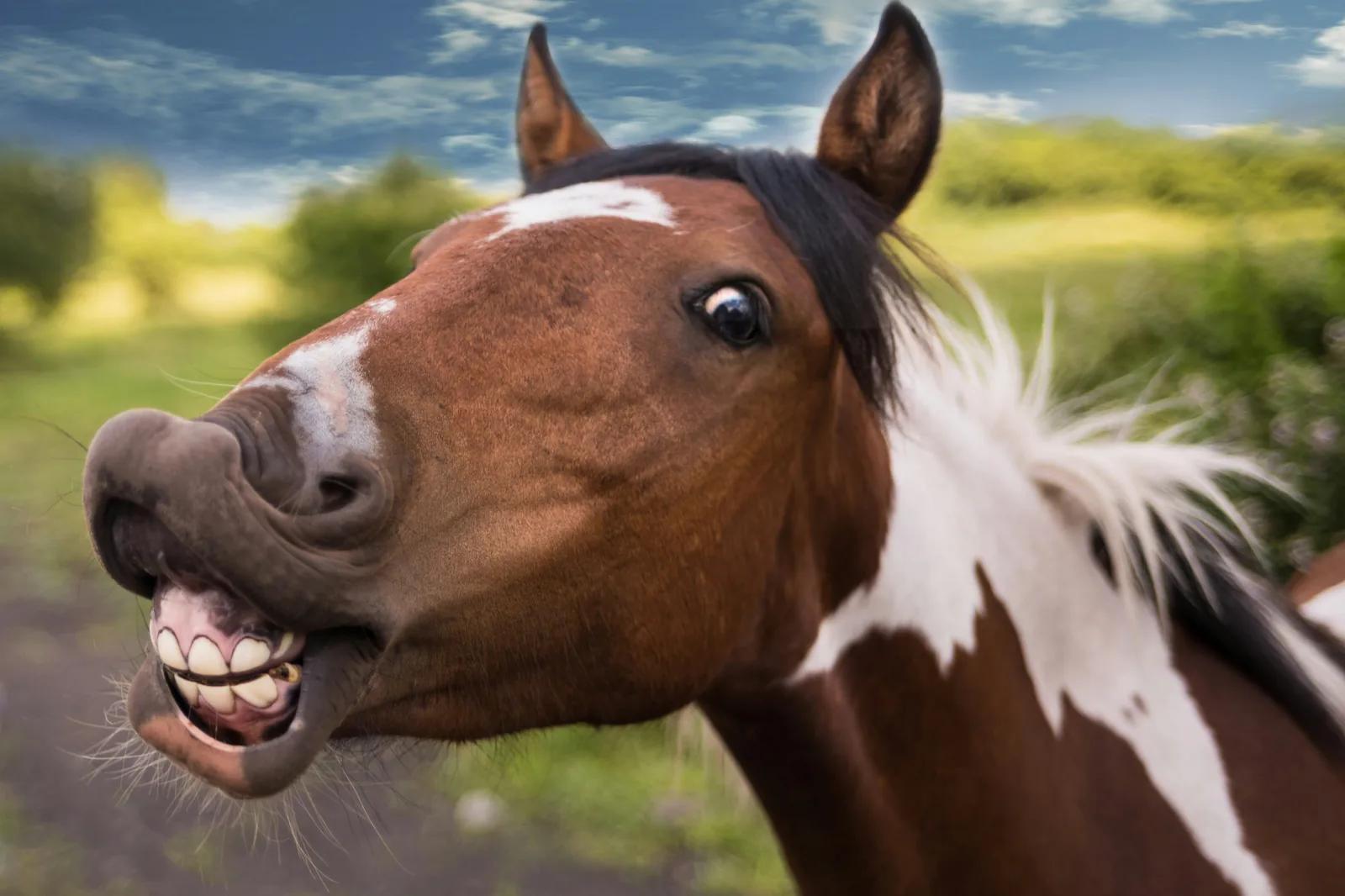
Horses communicate constantly — through ears, eyes, muscles, tail, and breath. Most of it never involves sound. Learning to read these 40 horse body language signals won’t just make you a safer rider; it will change how you see every interaction you have with your horse.
The Head and Ears: Antennas of Emotion
Your horse’s head and ears act as their radar. Because horses are prey animals, they’re scanning their environment constantly — and where the ears point is where the attention is.
Ear Position
Ears Forward
Curiosity, interest, or alertness. Your horse is tuned into something ahead — a sound, sight, or movement. Pay attention to where the ears are pointing; that’s where their focus is.
Ears Flicking Back and Forth
Divided attention. They’re splitting focus between you and their surroundings. Common during spooky trail rides or busy warmup arenas — not a red flag on its own, but worth noticing.
Ears Flat Back
A clear warning. Anger, defensiveness, or genuine discomfort. This is a horse telling you — or another horse — to back off. It’s not a signal to push through.
Ears Relaxed to the Side
Calm and content. Sometimes paired with a lowered head and a soft eye. A horse in this state is comfortable, possibly drowsy.
Head Position
Head Held High
Heightened alert or fear. Horses raise their heads to see further and prepare to move fast. A head carried high during flatwork often means your horse is tense, not forward.
Head Lowered
Calmness and trust. A horse voluntarily lowering its head — especially during training — is releasing tension. It’s one of the clearest signs of relaxation you’ll see.
Rapid Head Tossing
Irritation with something specific: tack fit, bit pressure, insects, or stress. If you see it consistently under saddle, start with the bridle and work outward.
Head Bobbing
Context-dependent. Light nodding can be anticipation of food. Rhythmic, repetitive head bobbing during work typically signals discomfort or pain — worth a veterinary check if it persists.
A horse showing discomfort is still communicating — the question is whether you're paying close enough attention to catch it early. That kind of attunement isn’t accidental; it’s built the same way any deeper bond is.
The Eyes: Windows to Their Mood
Horse eyes are among the largest of any land mammal, built for wide peripheral vision. Their expression mirrors emotional state more directly than almost any other signal.
Soft Eyes
Relaxed lids, gentle gaze. Your horse is comfortable and feels secure. When you see soft eyes, you’re doing something right.
Wide Eyes with Whites Showing
Fear or alarm — often called whale eye. The horse is hyper-vigilant and possibly preparing to bolt. Don’t step in front of a horse showing this; give them space and time.
Hard Eyes
Tension in the brow, a narrow or fixed gaze. Irritation or discomfort, sometimes a precursor to aggressive behavior. Different from a confident alert look — the difference is in the muscles around the eye.
Eye Wrinkles
Triangular wrinkles above the eye, similar to frown lines. Research into equine facial action (EquiFACS) has linked these to sustained stress or pain. If your horse regularly shows this expression, it’s worth investigating the cause.
Reading your horse’s eyes is about catching subtle shifts — the difference between soft and tight muscles around the brow tells you more than most people realize. Once you start seeing it, you can’t unsee it.
Tension in the eyes and brow is diagnostic — but the deeper question is what your horse is bracing against. That often traces back to gaps in the fundamentals of how they’re being ridden.
The Mouth and Nostrils: Tension or Trust?
The mouth and nostrils are precise indicators — stress, relaxation, curiosity, and physical effort all show up here before they appear anywhere else in the body.
Relaxed Mouth with Chewing or Licking
A horse that begins to chew and lick after a tense moment is processing and coming down from stress. It’s a transition signal — your horse is finding their feet again.
Tight Mouth
Stress, pain, or resistance. A horse bracing against the bit will often show this before any other physical sign. Look at the corners of the lips and the muscles of the jaw.
Yawning Without Sleepiness
A stress release. Horses yawn to discharge tension after a difficult training session, a vet visit, or any situation that put them on edge. It’s a good sign — it means the pressure has passed.
Flared Nostrils
Excitement, alarm, or physical exertion. At peak effort — a gallop, a bold jump — flared nostrils are functional. At rest, they typically signal something has their attention.
Relaxed Nostrils
Soft, rounded nostrils tell you the horse is calm and content. One of the quietest signals, but a reliable one.
Clenched Jaw
Stress, pain, or resistance. Visible tension in the jaw muscles is a red flag under saddle. It often appears with ill-fitting equipment, harsh contact, or being pushed past the horse’s comfort threshold.
Flicking or Lifting Lips
Exploration, mild irritation, or tension release. Occasional lip movement is normal curiosity. Abrupt or repetitive lifting — especially when bridled — often means the horse is reacting to something specific.
Licking and Chewing
When it appears unprompted during a relaxed grooming session, it signals acceptance and ease — different from the post-stress version in both timing and rhythm. This one is pure contentment.
Rolling the Lips
Curling or stretching the lips without food present is usually a tension release. Excessive curling or grinding may indicate stress or dental discomfort — particularly if tack has recently changed.
Muzzle Movements
Gentle exploratory muzzle contact — pressing against your hand, clothing, or a bucket — reflects curiosity. More animated muzzle activity is often a personality trait in naturally expressive horses.
Some horses nicker softly with slightly flared nostrils when they hear you coming — not for food, but because they recognize you. That quiet sound, paired with soft eyes, is about as clear a greeting as a horse gives.
A horse that greets you warmly is telling you something real — but comfort in the tack is its own signal worth checking separately. Ill-fitting equipment shows up in body language too.
The Neck and Body: The Core of Expression
The horse’s neck and body posture are often the clearest indicators of how they feel. These four signals are the ones most riders learn to read instinctively — and the ones most worth slowing down to actually see.
Arched Neck, Relaxed Back
Confidence and willingness to engage. You’ll see this in collected movement or when a horse is naturally showing off. The back staying relaxed is the key detail — collection without tension.
Tense, Hollow Back with Raised Head
Stress or resistance, often in response to ill-fitting tack or too much pressure. A horse carrying this posture cannot truly work through their back — and pushing through it makes the problem worse.
Resting Posture
One hind leg cocked, hip dropped, head low. Your horse is comfortable and resting. One of the few signals that requires almost zero interpretation.
Rigid, Braced Body
Anticipation — either flight or aggression. A horse that has gone suddenly still and stiff is not relaxed. Something has their full attention and they haven’t decided what to do about it yet.
The Tail: The Mood Barometer
The tail is one of the most expressive parts of a horse’s body — and one of the most overlooked. Riders tend to focus on the front end. Watch the back.
Loose and Swinging
Relaxed and calm. A tail that swings naturally with the horse’s movement during work is a good sign — it means the back is free.
High and Flagged
Excitement, playfulness, or fear. Arabian and other high-spirited breeds carry their tails high more frequently. In any horse, a flagged tail in the paddock usually means something interesting — or alarming — is happening.
Tucked Between Hind Legs
Fear or submission. A tail pulled tight against the body is a horse telling you they feel unsafe. Don’t mistake it for compliance.
Swishing Rapidly
Irritation. Flies are the common culprit on the ground. Under saddle, persistent rapid tail swishing usually means frustration with aids, discomfort, or both — worth slowing down to find out which.
Catching these signals in the moment is a habit, and it starts before you ever pick up a brush. The rest of that habit is worth building on purpose.
Hooves and Legs: Small Movements, Big Messages
Watch the legs closely. Horses telegraph movement well before they act — a subtle shift of weight or a lifted hoof is often a sentence beginning, not a reaction.
Pawing the Ground
Impatience or frustration — most commonly at feeding time or when tied too long. Persistent pawing in other contexts can indicate mild discomfort.
Stomping
Typically a reaction to insects, but can express annoyance at handling or tack. One stomp means flies. Repeated stomping often means something is bothering the horse beyond bugs.
Striking
Aggression or frustration. A horse that strikes out with a front leg is communicating serious displeasure — or asserting dominance with another horse. Take it seriously.
Resting a Hind Leg
Relaxation in most contexts. Worth noting if it’s always the same leg and accompanied by shifting weight — that pattern can indicate soreness.
Shifting Weight Repeatedly
Discomfort or anxiety. A horse that can’t settle — constantly moving from foot to foot — is telling you something isn’t right. Check the footing, the environment, and if it persists, the feet.
Foot Dragging
Fatigue, mild discomfort, or impatience. Light dragging at the end of a long session is normal tiredness. Persistent dragging in a rested horse, especially paired with weight shifting, warrants a vet evaluation.
Horses communicate readiness to move long before they act. A subtle lift of a hoof can be the precursor to kicking, bolting, or simply shifting position. The difference is in what came before it.
Body Movement: Reading What Comes Next
These four signals deal with weight, contact, and positional language — the physical vocabulary of trust and dominance that horses use with each other and with us.
Leaning In or Away
A horse that leans slightly into your space or rests against you is showing trust and seeking contact. One that consistently turns its hindquarters toward you or leans away is setting a boundary. Both are clear — one invites connection, one asks for distance.
Stretching Hindquarters
Comfort and release. A horse stretching a hind leg out behind them is relaxed and letting go. If the same stretch happens alongside tension elsewhere in the body, it may signal soreness rather than ease.
Shaking Off
Horses shake their whole body — most often after grooming, bathing, or intense work — as a physical way of releasing tension. Frequent or abrupt shaking during handling can signal irritation with tack, insects, or stress.
Physical Blocking
Dominance. In a herd, dominant horses use their body weight and positioning to control the movement of lower-ranking horses. If a horse does this with you, it’s not playfulness — it’s a statement about who they think is in charge.
When Your Horse Is Saying I Love You
These aren’t dramatic gestures. Horses are subtle — their affection looks less like a dog jumping up and more like a horse that simply chooses to stay.
Mirroring Your Energy
A horse that adapts their pace, posture, or stillness to match yours is showing a deep level of attunement. It takes time and consistency to earn — and you’ll know it when you feel it.
Nuzzling and Licking
A soft nudge or gentle lick is direct contact offered freely. Horses don’t give this to everyone. If your horse nuzzles you while you’re just standing there — no food, no agenda — that’s the signal.
A Relaxed Body in Your Presence
Half-closed eyes, loose ears, a dropped hip. When a horse physically relaxes the moment you walk up, they’re telling you your presence is safe to them.
Resting Their Head on You
Placing their head on your shoulder or chest is contact initiated by the horse, not requested by you. There’s no practical reason for it. It’s connection, nothing else.
Choosing to Stay Near You
A horse that grazes near you, follows you across the paddock without prompting, or positions themselves at the fence when you’re working nearby — that’s a choice. Horses don’t linger where they’d rather not be.
Greeting You
A whinny or nicker when you appear — especially without food in your hand — is recognition and, at some level, gladness. Horses are not obligated to care that you showed up. When they do, it means something.
“Just as you invest in well-made tack, invest in the time to understand the animal wearing it. The connection you build there is the most valuable thing in the barn.”
Context Always Matters
Body language doesn’t exist in isolation. A swishing tail might mean flies, or it might mean frustration with your leg aids. Ears pinned back could signal aggression, or simple concentration during a difficult movement. The signal only makes sense in its full context.
When you notice something, ask yourself what’s happening in the environment right now, what your horse’s baseline mood has been today, and what other signals you’re seeing alongside the one you noticed. No single gesture tells the whole story.
Understanding context prevents misreading — and misreading is where accidents and setbacks come from.
How to Practice Reading Horse Body Language
Reading body language improves with deliberate practice. Not just watching, but slowing down enough to actually see what’s in front of you. Three habits that build it quickly:
Mirror Practice
Spend time moving slowly beside your horse — walking when they walk, pausing when they pause, matching their rhythm. You’re not mimicking; you’re learning to feel their pace from the outside in.
Silent Watching
Sit in the paddock or arena and observe without a plan. Watch how horses communicate with each other — the small positioning shifts, the ear conversations, who moves away from whom. What you learn about horse-to-horse language transfers directly to how you handle your own.
Journaling Your Horse’s Patterns
Keep notes on your horse’s posture in different settings: at feeding time, during warmup, in the cross-ties, at shows. Patterns emerge over time. What looks like random behavior on a given Tuesday usually has a cause — and your notes will help you find it.
The next time you approach the paddock gate, pause for 30 seconds before you move toward your horse. Watch the ears. Check the tail. Notice where the head is. Your horse is already in conversation — with you, with the environment, with themselves. Learning to listen to that conversation is what separates a good rider from a real horseperson.
The Elevated Tack Room Lookbook
15 finds every equestrian actually needs — curated, tested, and worth every penny. Free when you join the list.
Frequently Asked Questions
What does it mean when a horse pins its ears flat back?
Ears pinned flat against the skull signal anger, defensiveness, or pain — a clear warning that your horse wants you (or another horse) to back off. If you see this frequently under saddle, investigate tack fit and back comfort before pushing through. Flat ears combined with a tense jaw and swishing tail are a more serious composite signal.
Why does my horse lower its head during grooming or training?
A voluntarily lowered head is one of the clearest signs of relaxation and trust in horses. The horse is releasing tension and signaling that they feel safe. In training, a dropped head after pressure is released indicates the horse is processing correctly. Reward it — especially in young or reactive horses, it’s a significant marker of progress.
What is whale eye in horses?
Whale eye refers to wide, strained eyes with the whites clearly visible — named for a whale’s lateral eye. It signals fear, stress, or extreme alertness. A horse showing whale eye is close to the edge of their comfort zone and may react unpredictably. Give them space, lower the pressure, and wait for the eyes to soften before continuing.
What does tail swishing mean while riding?
Under saddle, a persistently swishing tail almost always signals frustration or discomfort — not flies. Common causes include conflicting or too-strong leg aids, an ill-fitting saddle, back soreness, or being pushed past the horse’s physical threshold. Slow down and investigate before pushing through. If the swishing stops when you lighten the aids, you have your answer.
What does licking and chewing mean in horses?
Licking and chewing signals a transition from tension to relaxation — the horse’s nervous system coming down from a heightened state. It’s commonly seen after a difficult training moment has resolved. It means the horse is processing and settling, not that they’ve simply complied. If you end a session on this signal, you’ve found a good stopping point.
The Elevated Tack Room Lookbook
15 finds every equestrian actually needs — curated, tested, and worth every penny. Free when you join the list.
No spam. Unsubscribe anytime.
Done
You're on the list. Check your inbox — your guide is on its way.