
This article contains affiliate links. We earn a small commission on purchases at no extra cost to you.
These are the equestrian home decor ideas worth spending on: fifteen-plus pieces across wall art, textiles, brass, lighting, and leather — each one here because it earns its place. For the philosophy behind the choices, the companion guide covers how to bring the barn inside without going cliché.
Textiles: what Stick & Ball is doing
No affiliate arrangement exists with Stick & Ball yet. These are not affiliate links. They are the most considered equestrian textiles available, and leaving them out because of a paperwork gap would be the wrong editorial call.
Stick & Ball was founded in 2011 by Elizabeth Goodwin Welborn — a polo player and designer who built the brand from inside the culture rather than toward it. B-Corp certified, California-based, operating on a soil-to-soil philosophy that means limited quantities and no disposable pieces. The textiles are jacquard-loomed baby alpaca, finished by hand by local artisans. The Polo Pony Throw ($695) is drawn with enough restraint that the pattern reads as composition rather than decoration. The Blanket Stitch Alpaca Throw ($395) has no motif at all — just the weight of baby alpaca and a hand-finished blanket stitch edge, which is the entire design.
The Pampa Pillow (around $265) pairs naturally with the Polo Pony Throw — same material register, different geometric surface. The Diamond Stripe Pillow (around $205) is the lowest entry point in the range and still the most considered pillow in the room. All four pieces sit in warm charcoal, ecru, and neutral tones that work against any equestrian palette without announcing themselves.
These are the textiles to know. When an affiliate arrangement is in place, the cards will live here. In the meantime: stickandball.com/collections/pillows-throws.
“The equestrian home doesn't announce itself. It reveals itself in the weight of a textile, the warmth of the palette, the fact that everything in the room was chosen rather than accumulated.”
Silk as wall art: CECILIA
Most people have never considered framing a silk scarf. That is the gap this section is closing.
A 90cm silk twill scarf occupies a scale between a standard art print and a stretched canvas — larger than most framed photographs, smaller than most paintings, and specific in a way that both categories can fail to be. The surface is not paper. It does not read flat under light. Silk twill has a subtle sheen that shifts as you move across a room: at different hours, in different light, the composition reads differently. That quality is not replicable in a printed reproduction. It is the material doing the work.
CECILIA designs in the tradition of the great European silk houses — equestrian composition, hand-rolled edges, 90cm silk twill built to hold its colour for decades. The references in each design are specific and accurate, drawn from within the culture. The carousel, the race programme, the paddock at dawn — these are not illustrations of horses for people who like horses. They are drawn records of a world that belongs to the people reading this post. That specificity is what earns the piece its place on a wall rather than in a drawer.
How to frame a CECILIA scarf
The scarf is 90cm square. A standard 24x24 inch frame fits it with room for a mat — no custom framing required.
Glass: UV-protective. Not standard picture glass. Silk twill is a protein fibre and will fade with prolonged UV exposure. UV-protective glass blocks the wavelengths that damage the dye. Conservation glass is a strong mid-point; museum glass is the highest grade. Standard glass is the wrong choice for anything built to last.
Mat: Two inches, linen texture, off-white or warm cream. The mat creates breathing room between the pattern and the frame edge, and it signals a deliberate choice rather than an oversized accessory. A linen-texture mat reads better beside silk than a standard white paper mat.
Frame: Thin profile, aged brass or dark wood. The frame should not compete with the scarf. A thin aged-brass frame connects to the hardware vocabulary of the rest of the room without drawing the eye away from the pattern.
Placement: One scarf, one wall. Centre it at 57 inches from floor to the middle of the frame — standard gallery hanging height that works regardless of ceiling height.
The two picks
The Carousel 90 in claret and blue is the stronger colourway for framing. Rich enough to anchor a wall, specific enough to reward a close look, restrained enough to sit beside leather and dark wood without fighting them. This is the pick for a wall that currently holds nothing and needs one right thing.

Our Pick · Framed Wall Art
Carousel 90 Silk Twill Scarf
Around $220
CECILIA → Shop Now*Affiliate link — we earn a small commission at no extra cost to you.
The First Call 90 carries a deeper, darker race-day composition. It works best where the walls are lighter — cream or parchment — because the scarf carries the colour weight itself. If you want to see it in the space before committing to a frame, drape it folded over a console tray first. It reads well both ways.
Supporting Pick · Silk
First Call 90 Silk Twill Scarf
Around $220
CECILIA → Shop Now*Affiliate link — we earn a small commission at no extra cost to you.
Leather home goods: Ivy Cove
Ivy Cove is a Montecito-based leather goods brand with one differentiator that changes the purchase logic entirely: a complimentary lifetime repair guarantee on every leather piece they make. Not a warranty with fine print. Not a replacement policy. Repair. If a piece is damaged — a seam separates, a surface is scuffed beyond normal conditioning — they fix it.
Full-grain leather is what makes that guarantee possible. It is the outermost layer of the hide, where the fibres are tightest, the surface most durable, and the natural character most present. It does not peel. It does not degrade. Over years of use it develops a patina — darkening where it is handled most, softening where it flexes — that makes it more beautiful rather than less. A brand that offers lifetime repair is telling you something specific: the material is good enough that repair is a better offer than replacement. That is the Ivy Cove position, and it is the right one.
The home decor range is small. Four pieces in this post. That restraint is intentional — every piece in it was worth keeping.
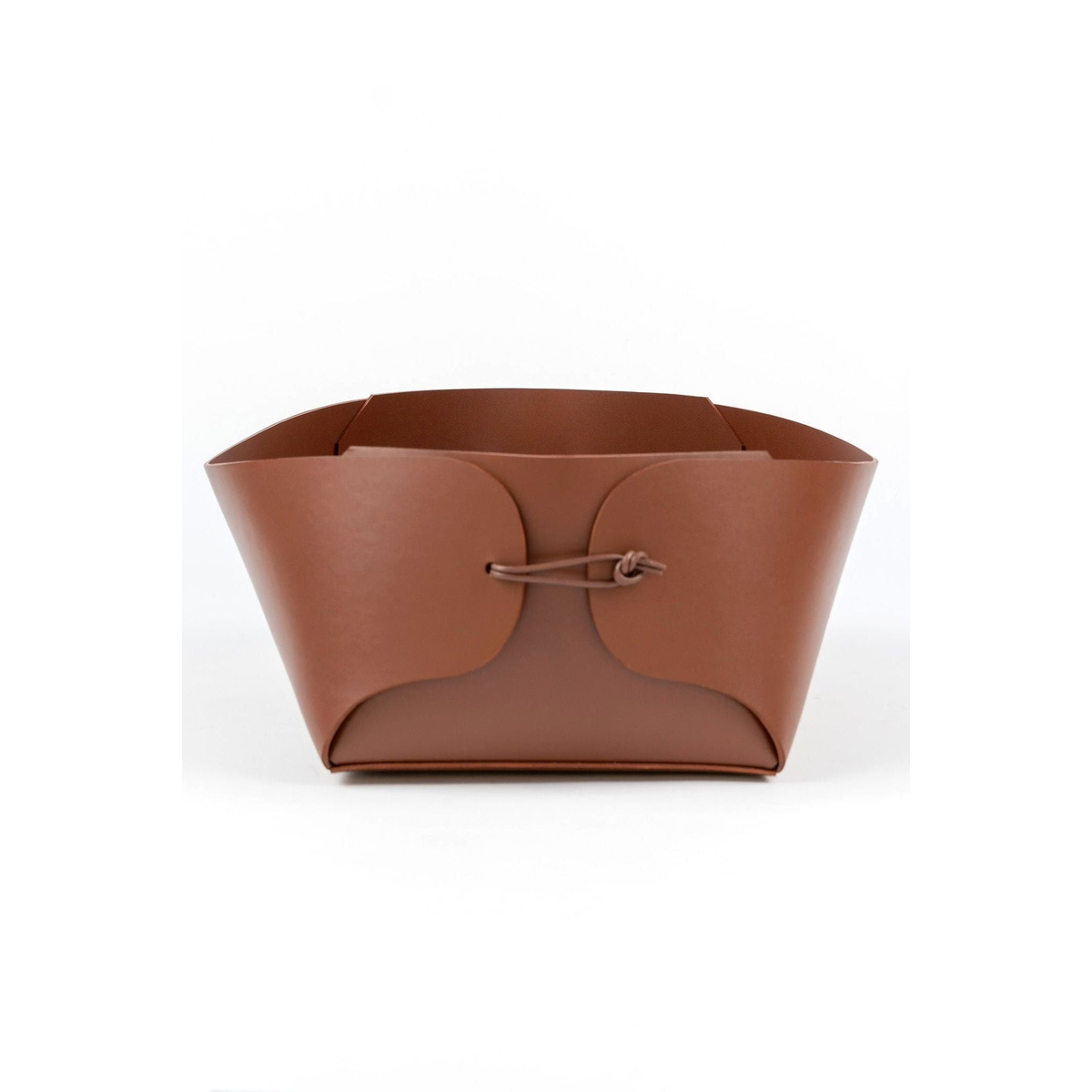
The Edgecliff Leather Basket
The anchor piece. Rigid natural leather, 14.5 inches long by 8.5 inches wide by 7 inches tall. Full-grain, brown, architectural in its construction. This is not a basket that softens and slumps after a season — the leather holds its form permanently because it is built to do so.
What it does in a room is simple: it gives the horizontal surfaces that need a container — a coffee table, an entryway console, a home office desk — something worth looking at. Magazines, folded throws, correspondence, the things that belong somewhere near where you sit. All of it fits inside a piece that reads as considered rather than managed. The brown leather tone sits naturally beside dark wood, aged brass, and linen. It does not try to match. It belongs.
The lifetime repair guarantee means the only question is where to put it, not how long it will last.
Our Pick · Leather Basket
Edgecliff Leather Basket
Around $224
Ivy Cove → Shop Now*Affiliate link — we earn a small commission at no extra cost to you.
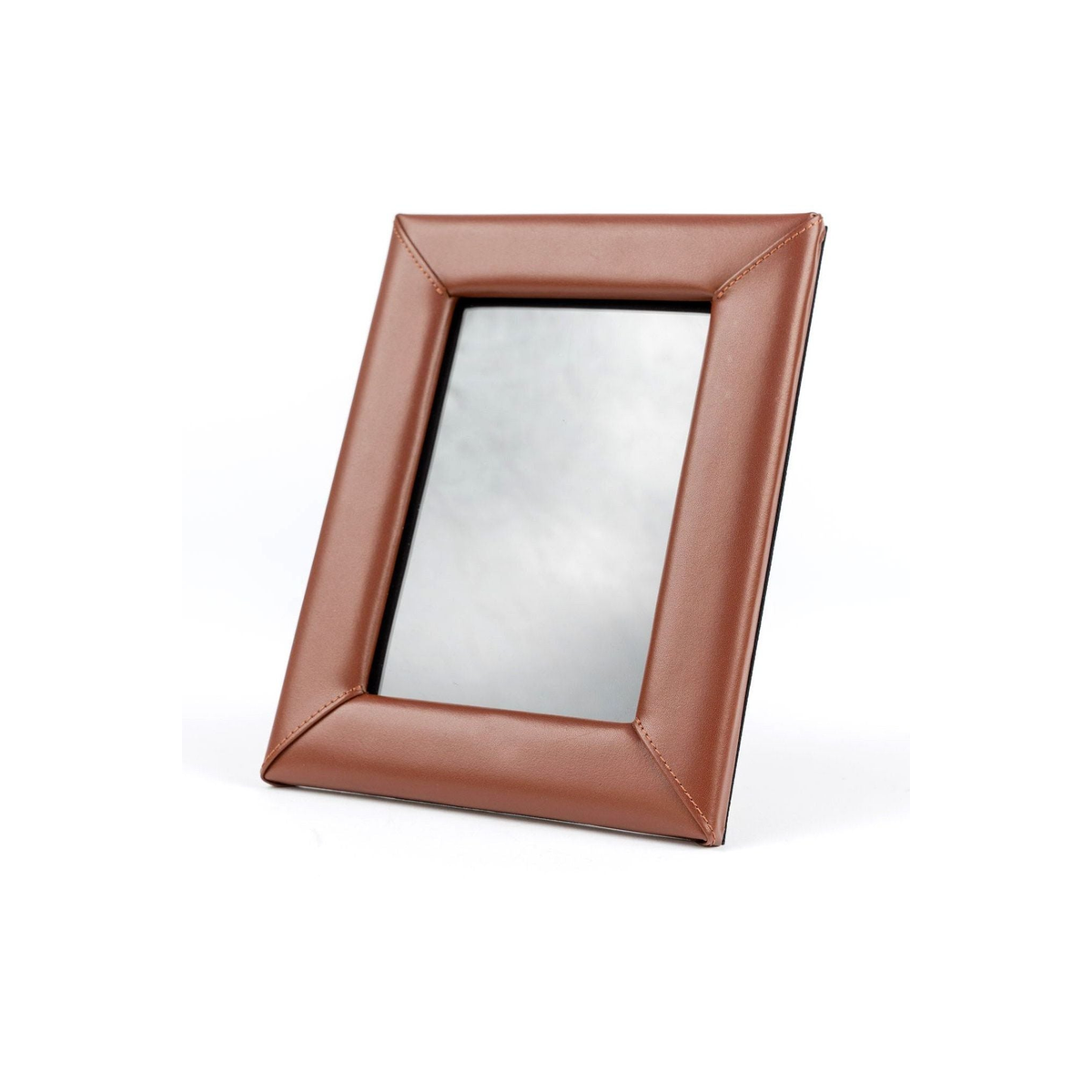
The Hampton Photo Frame
The piece that makes a shelf specific rather than styled. Full-grain leather, 7 by 9 inches outer dimension, holding a 4x6 photograph. The leather construction makes it sit with a weight and permanence that lacquered wood or matte plastic does not have.
The photograph inside matters as much as the frame. This piece earns its place when the image inside it earns its place — your horse by name, a competition that changed something, a place you return to. A generic equestrian stock photograph in a leather frame is a prop. A real photograph of a real horse in a real leather frame is a piece of a life, on display in the room where that life happens.
The Hampton Frame is also the most personal gift in this post. Paired with a specific photograph chosen by the giver, it is the kind of thing someone keeps for thirty years.
Leather Photo Frame
Hampton 4x6 Photo Frame
Around $96
Ivy Cove → Shop Now*Affiliate link — we earn a small commission at no extra cost to you.
The Cliffside Planter and the Dana Point Hanging Planter
The lower-commitment entries into Ivy Cove's range — and a strong argument for starting here before committing to the larger pieces.
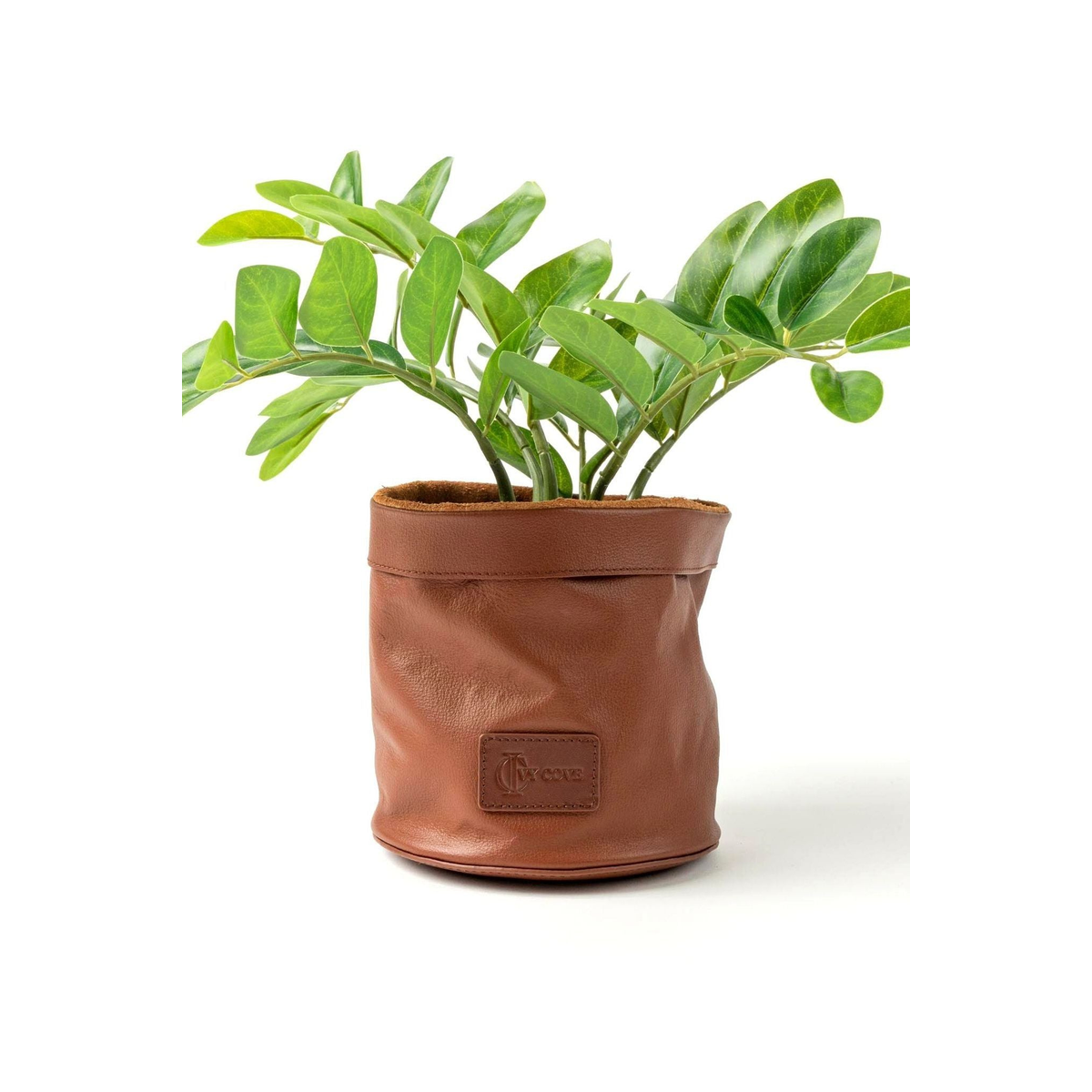
The Cliffside Large Leather Planter wraps a standard terracotta pot in full-grain leather. 7.5 inches cubed. It slips over an existing planter and changes the entire material register of the piece. A terracotta pot with a leather wrap is no longer a terracotta pot on a shelf — it is a leather object with a plant inside it, which reads differently beside a book, a brass candleholder, and a framed photograph. Fifty-one dollars. Lifetime repair.
The Dana Point Hanging Planter brings the same material into a vertical space — 21 inches tall, 6 inches wide, full-grain leather, brown. It needs its own canvas insert, which is not included, but the leather housing is the object. In a corner with a trailing plant or at a window, it brings material warmth into the kind of vertical space where most home decor defaults to macramé or wire.
Leather Accent · Planter
Cliffside Large Leather Planter
Shop Now →
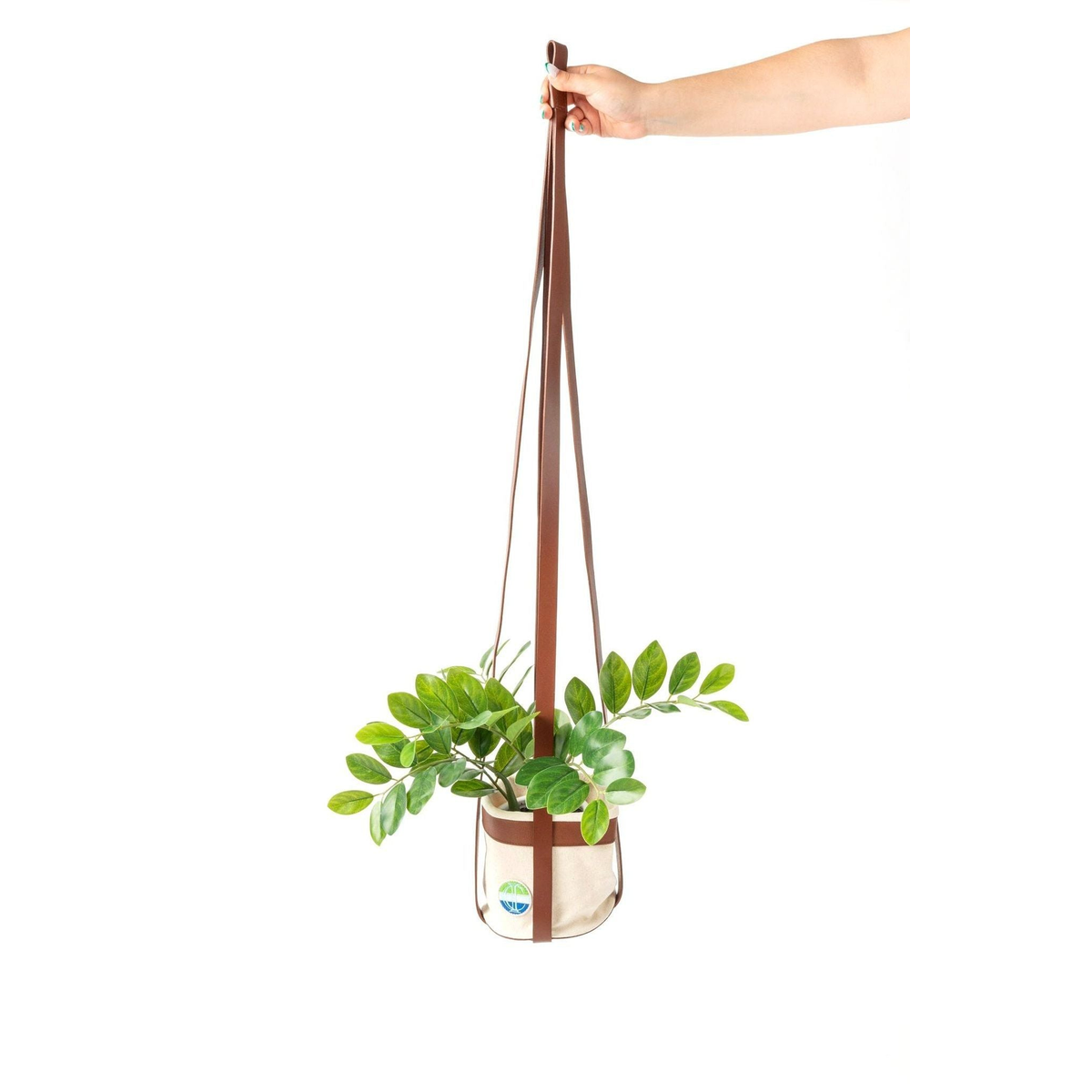
Leather Accent · Hanging Planter
Dana Point Leather Hanging Planter
Shop Now →
A note on collecting these pieces over time: the basket, the frame, and the two planters all use the same material in the same brown tone across four different functions. Gathered gradually in the same room, they create the effect of a space that has been furnished with a consistent eye rather than decorated with themes. One material. Four uses. The equestrian home principle applied to leather.
Heirloom furniture: Amish Furniture
This section is longer than the others because the subject deserves it. Amish furniture is not a style trend or an aesthetic category. It is a method of making — and the method is why it belongs in an equestrian home more genuinely than almost anything else in this post.
What Amish furniture actually is
Every piece is made by hand in small workshops across the USA by craftsmen who have done this work their entire lives. No factory floor. No assembly line. No shortcuts taken because a cost accountant decided a corner could be cut.
The joinery is what separates it. Mortise-and-tenon construction throughout — solid hardwood from surface to core, the same species and grain all the way through. When you set something on an Amish console table, you are resting it on wood that has been properly dried, properly milled, and properly joined. Nothing flexes that should not.
The finish is where Online Amish Furniture separates itself from every other Amish retailer. Their dedicated finishing partner, Spectrum Finishing LLC — a member of the Northern Indiana Woodcrafters Association — applies an Acrylic Urethane finish using Italian coatings technology. It has been tested to resist a 400°F pan for five minutes, five days of water submersion, ten years of UV equivalent, and a battery of common kitchen chemicals including vinegar, coffee, and alcohol. Most furniture brands do not publish a finish specification at all. This one publishes the test results.
The customisation depth is also worth naming: twelve solid American hardwood species, over seventy stain colours, and four levels of hand-applied distressing — including a hand-planed medium distressed finish applied by Spectrum's artisans. You are not choosing from a catalogue of pre-built options. You are specifying a piece. That distinction matters.
The wood species guide
You choose your wood at order. This matters more than the piece itself, because the wood determines the palette and character the furniture carries into a room for its entire life.
Walnut is the right wood for an equestrian home. The deep chocolate tone — nearly espresso when oiled — pairs naturally with aged brass hardware, full-grain leather, and warm linen. It is the colour of a well-conditioned tack trunk, which is not a coincidence — both materials come from the same tradition of functional objects made to age well. Walnut develops a patina over decades: it lightens slightly with light exposure and deepens with handling, becoming more beautiful every year rather than less.
Cherry is the alternative if walnut reads too dark. It starts lighter — a warm, pale reddish-brown — and deepens dramatically over the first ten to fifteen years. A cherry piece bought today will carry a rich mahogany tone in a decade. If you want furniture that visibly matures the way well-kept leather does, choose cherry deliberately and let it do what it does.
Quarter-sawn white oak carries a distinctive medullary ray figure — a fleck pattern visible only in quarter-sawn cuts. It is the grain of Arts and Crafts furniture, of English library pieces built to last a century, of tack room cabinetry in the oldest yards. It reads heritage and specific. If the rest of your home skews lighter and you want equestrian character without the depth of walnut, this is the wood.
Brown maple is the most versatile. It takes stain evenly, which means it can be matched to existing wood tones in a room more reliably than species with stronger natural character. The practical choice when adding Amish furniture to a space that already has other pieces.
The lead time — and what it signals
Eight to sixteen weeks. Every piece is made when you order it, not pulled from a warehouse. Your piece does not exist until you commission it.
This detail separates a genuinely made piece from one sold as handcrafted but arriving in a flat-pack box from a distribution center. Waiting six weeks is not an inconvenience. It is evidence that what you ordered is being made for you, in the wood you chose, to the dimensions that work for your space. That is what it should be.
The investment logic
A piece of Amish furniture costs more upfront than a comparable mass-market piece. It costs significantly less over forty years. The mass-market piece degrades — the surface chips, the joints loosen, the structure fails and is eventually replaced. The cycle repeats.
The Amish piece does not degrade. The joints tighten rather than loosen as the wood settles. The surface develops character. The piece moves from the room it was bought for into the next room, and eventually into the next household, without losing anything.
It is the same logic that applies to leather tack: buy well once, maintain it, and it outlasts everything purchased around it by decades. Price per year of use, spread across forty years, is lower than almost any alternative.
Three pieces to start with
The Heritage Cedar Chest — available in 38" or 48" wide — is the right first piece. Fully cedar-lined interior protects folded saddle pads, wool throws, and heirloom textiles from moths and moisture, and adds a barn note that no manufactured chest can replicate. Choose walnut.
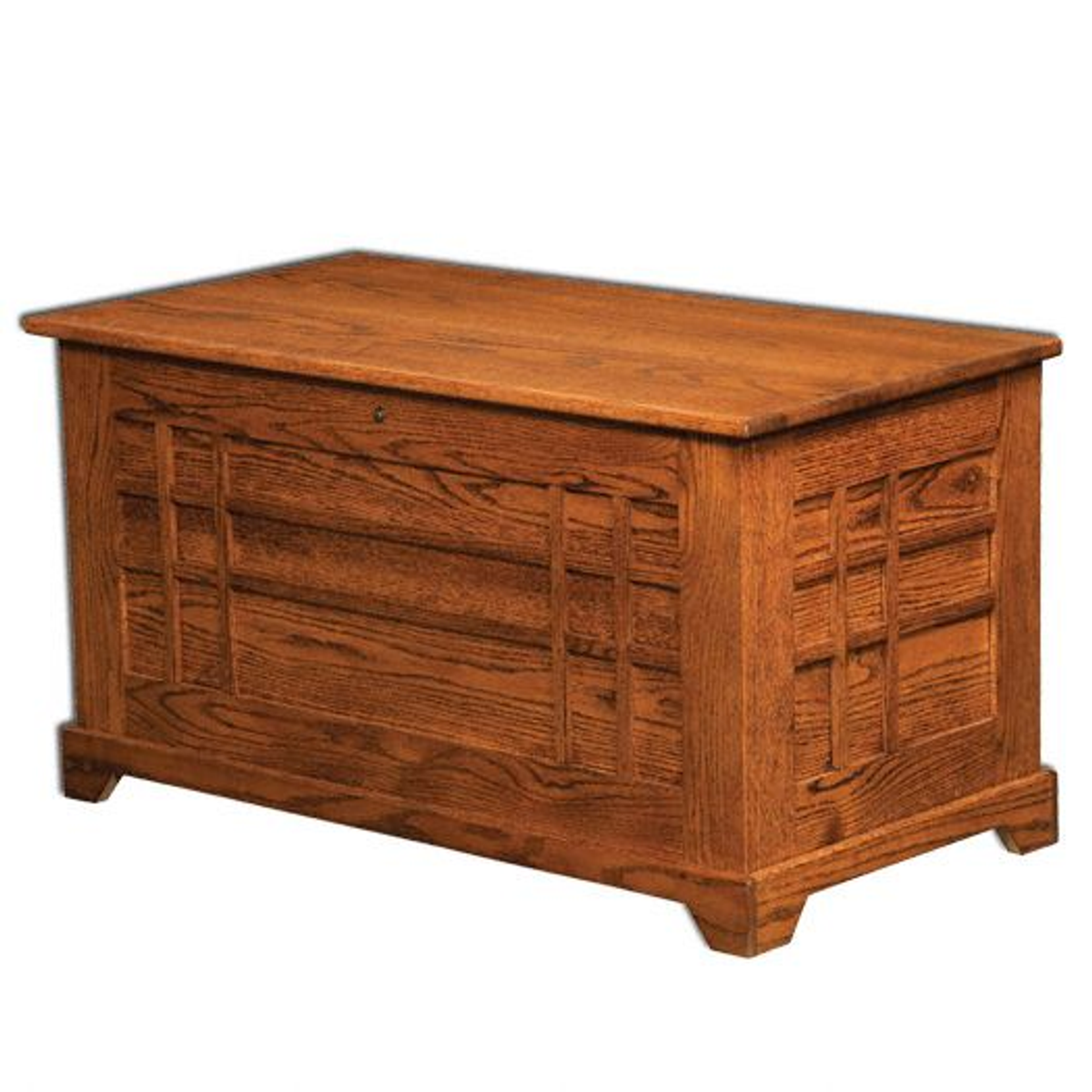
Investment Piece · Cedar Chest
Heritage Cedar Chest
Around $1,121
Online Amish Furniture → Shop Now*Affiliate link — we earn a small commission at no extra cost to you.
The Traditional Barrister Bookcase (36"W, available in 2–5 door configurations up to 76.5" tall) is the piece for a home office wall or a tack room that doubles as a study. Individual glass-paneled compartments keep the clutter of daily life out of sight while making every shelf a considered display. Solid hardwood throughout, made to order in your choice of American hardwood and finish.
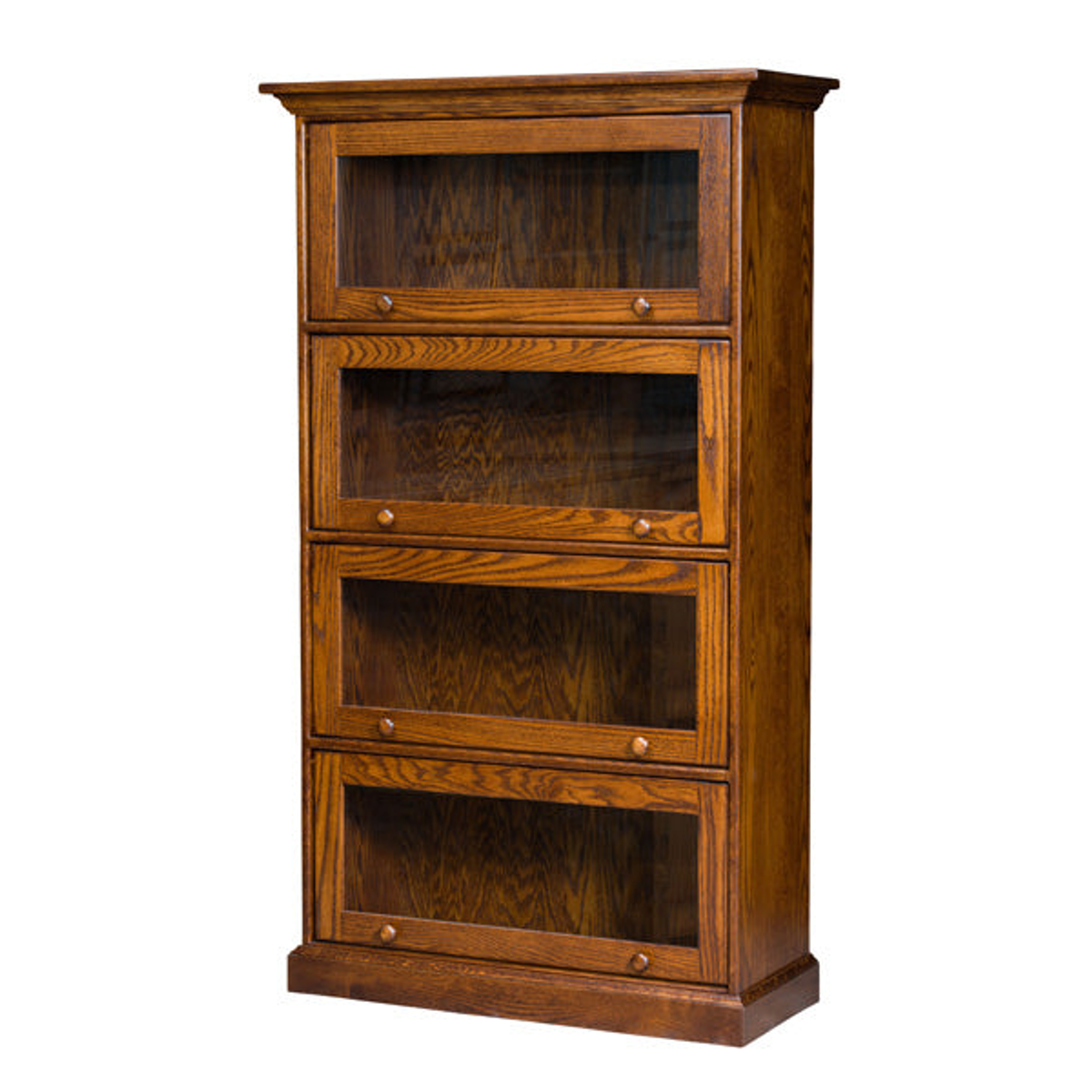
Investment Piece · Bookcase
Traditional Barrister Bookcase
Around $803
Online Amish Furniture → Shop Now*Affiliate link — we earn a small commission at no extra cost to you.
The Mission Gateway Sofa Table (46"W × 15.5"D × 26.5"H) is the console for a hallway, an entryway wall, or the space behind a sofa. Shallow enough to hold a lamp and a leather basket without claiming a walkway, solid enough to hold them for the life of the house. In walnut, it is the piece visitors stop to ask about.
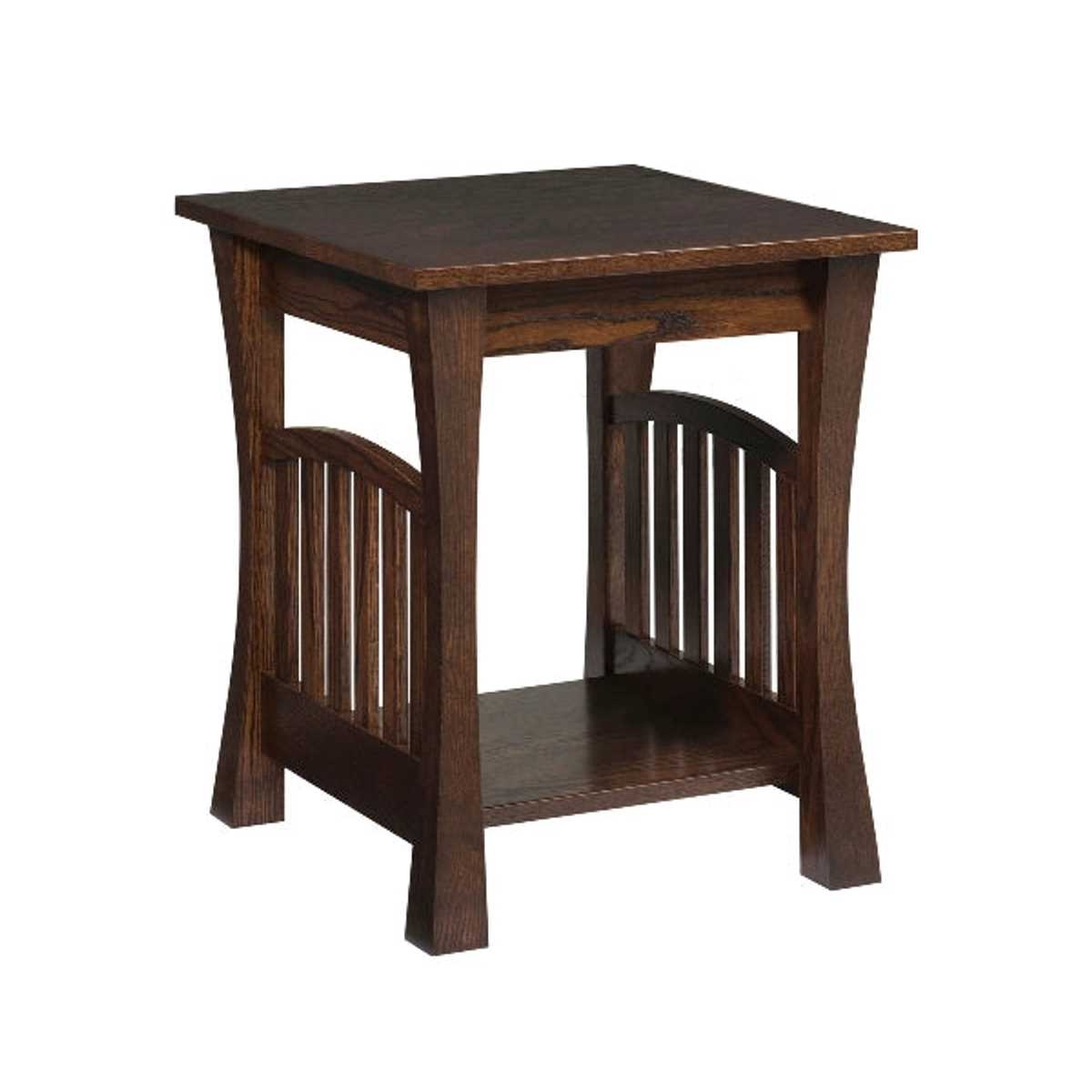
Investment Piece · Console Table
Mission Gateway Sofa Table
Priced to order — contact Online Amish Furniture
Online Amish Furniture → Shop Now*Affiliate link — we earn a small commission at no extra cost to you.
The cedar chest and bookcase have listed pricing on the Online Amish Furniture site. Contact them directly for a quote on the sofa table — pricing varies by wood species and finish. Budget with intention, and budget once.
Brass and iron accents
The difference between aged brass that reads right in an equestrian home and brass-plated hardware that does not is something you can identify before you buy — if you know what to look for.
Genuine aged brass is an alloy (copper and zinc) that has been allowed to oxidise over time or treated to replicate that process using chemical patination. The surface has warmth and slight irregularity — it is not uniform, and it does not reflect cleanly like a mirror. Pick it up: it is heavier than it looks. Run your finger across it: there is texture rather than a smooth lacquered film.
Brass-plated hardware is steel or zinc with a thin brass coating, usually sealed with lacquer to prevent tarnishing. It looks bright and uniform. It is lighter than genuine brass. Over time the lacquer yellows, the plating chips at edges and corners, and the piece begins to look cheap in a way that genuine brass — which only improves with age — never does.
The same test applies to iron. Solid iron has weight and a matte surface with slight texture. Painted steel is lighter and reads differently under light — more uniform, less warm, less honest.
For an equestrian home: aged brass hooks, iron candleholders in varied heights, brass picture frames with a thin profile. Two or three pieces across a room do more than a shelf of equestrian accessories. Hardware that feels heavy is hardware that will still look right in twenty years.
Wall art
Buying equestrian art well requires knowing what you are actually evaluating — because the category spans from around $51 vintage prints to around $5,800 original paintings, and the difference between a piece worth the wall and one that is not has nothing to do with price.
The standard is specificity. A named horse in a specific setting, drawn or photographed by someone who knows the difference between a collected canter and a running walk. A competition result. A paddock at a particular yard at a particular hour. These objects carry information that generic jumping silhouettes and mass-produced equestrian prints do not. Specificity is what makes a piece feel like it belongs in a room rather than on a wall.
For original art: Stick & Ball carries paintings by Karen Bezuidenhout — figurative equestrian work in the around $3,200–$5,800 range, 36–48 inches square. The Moonshine Rider and Midnight Rider are the strongest of the current collection. Specific compositions, quiet palettes, the kind of piece that defines a room for the life of the room. If one is within reach, it is a forty-year purchase.
For a lower price point: Vintage equestrian prints — hunt scene engravings, conformation plates, early polo photography, racing photography from named events — framed in thin brass or dark wood do the same visual work at a fraction of the cost. Estate sales and specialist equestrian print dealers are the right source. Online archival print platforms carry dated, attributed work that carries the specificity the category requires.
What to avoid: reproduction prints of generic jumping scenes, unattributed "equestrian art" sold in bulk by home goods retailers, and anything produced as home decor first and equestrian subject second. The test is whether the piece would mean something to someone who actually rides — or whether it would only mean something to someone who wants to look like they do.
One strong piece, framed well, on a quiet wall, does more than six smaller pieces competing for the same space.
Lighting
One rule: iron or aged brass base, natural linen shade. No chrome, no nickel, no cool-toned finishes.
The right lamp disappears when the room is working — its base sits solidly, its shade is close enough to the wall colour that it reads as part of the space rather than an object placed in it. The wrong lamp undercuts every correct decision around it. Most buyers treat lighting as infrastructure and get it last with whatever is left in the budget. This is why so many rooms that are almost right feel slightly off.
Warm bulb temperature matters: 2700K or lower. Anything above that reads clinical in a room built on warm neutrals, leather, and dark wood. The lamp does not need to be expensive. It needs to be right — which means iron or aged brass, linen, and warm light.
Frequently Asked Questions
What equestrian home decor pieces hold their value over time?
The categories that hold value are also the ones that age well: solid hardwood furniture made to order from real wood species (Amish furniture being the benchmark), full-grain leather goods with lifetime repair guarantees (Ivy Cove), hand-loomed baby alpaca textiles from makers like Stick & Ball, and silk twill from brands like CECILIA whose designs are drawn within the culture rather than toward it. What loses value fastest is anything trend-driven, mass-produced, or built from engineered wood or bonded leather. The investment logic is simple: buy the thing that gets better with age.
What equestrian lifestyle brands make home decor worth buying?
Four brands stand out. Stick & Ball (California, B-Corp) makes jacquard-loomed baby alpaca throws and pillows drawn from polo culture — the textiles in this post. CECILIA produces 90cm silk twill scarves designed for equestrian composition that frame as fine art. Ivy Cove (Montecito) makes full-grain leather home goods — baskets, frames, planters — with a lifetime repair guarantee. Online Amish Furniture makes solid hardwood pieces to order — twelve wood species, seventy-plus stain colours, hand-applied distressing if you want it, and a finish tested to withstand a 400°F pan and ten years of UV. No flatpack, no shortcuts.
Why does Ivy Cove offer a lifetime repair guarantee on leather home goods?
Because their pieces are made from full-grain leather — the outermost layer of the hide, where the fibres are tightest and most durable. Full-grain leather does not peel or degrade the way bonded or top-grain leather does. It develops a patina over time, darkening and softening with use. A brand confident enough in the material to offer lifetime repair is telling you something specific about the construction. It is the same logic as a quality leather bridle: maintain it, repair it when needed, and it outlasts everything purchased around it.
Is Amish furniture worth the price?
For statement pieces — a blanket chest, a bookcase, a console table — yes, without qualification. Amish furniture is solid hardwood throughout, made to order in your choice of twelve wood species and over seventy stain colours. The finish on Online Amish Furniture pieces is Acrylic Urethane with Italian coatings technology — tested to resist a 400°F pan, five days of water, and ten years of UV. You specify the piece, wait eight to sixteen weeks, and receive something made for your space. Spread across forty years, the price per year of use is lower than almost any mass-market alternative that will need replacing in a decade.
What wood should I choose when ordering Amish furniture?
Walnut is the strongest choice for an equestrian home — the deep chocolate tone pairs naturally with aged brass hardware and full-grain leather. Cherry starts lighter and deepens dramatically over the first ten to fifteen years, developing a patina similar to well-conditioned leather. Quarter-sawn white oak has a distinctive medullary ray figure that reads heritage and specific. Brown maple is the most versatile and takes stain evenly, which makes it the practical choice when matching to existing wood tones in a room.
How do I build an equestrian home decor collection without buying everything at once?
Start with a textile — a Stick & Ball alpaca throw or pillow sits on what you already own and changes the register of the room immediately. Add a leather accent next: an Ivy Cove planter or photo frame at around $51–96 introduces full-grain leather at a low commitment. Build toward a statement leather piece — the Edgecliff Basket at around $224 once you know the leather tone works in the space. Invest in Amish furniture last, when you know the room and are ready to commission something permanent. Each layer should be able to stand on its own before the next one arrives.
The Elevated Tack Room Lookbook
15 finds every equestrian actually needs — curated, tested, and worth every penny. Free when you join the list.
No spam. Unsubscribe anytime.
Done
You're on the list. Check your inbox — your guide is on its way.